
Shop for recipes, traditional highlights the richness of the food, and cultural-of the people, Despite
The action is a result of the implementation of the community-based tourism in the lands of the people, Despite that, in the northwest region of Mato Grosso
AI generated audio
Chichas of yam, sweet potato, banana da terra and the corn is soft. Cookies in corn, sweet, and leave. Cassava flour is fresh. The bread and bananas, or pounded into the mortar and pestle with corn is made on the stone. Fish and baked in a sheet of a large number of. These are just a few of the dishes prepared during the workshop, the recipes of traditional cuisine Despite that, they gathered together 22 of the women, and representatives of the eight towns and villages in the three areas of people, Despite that.
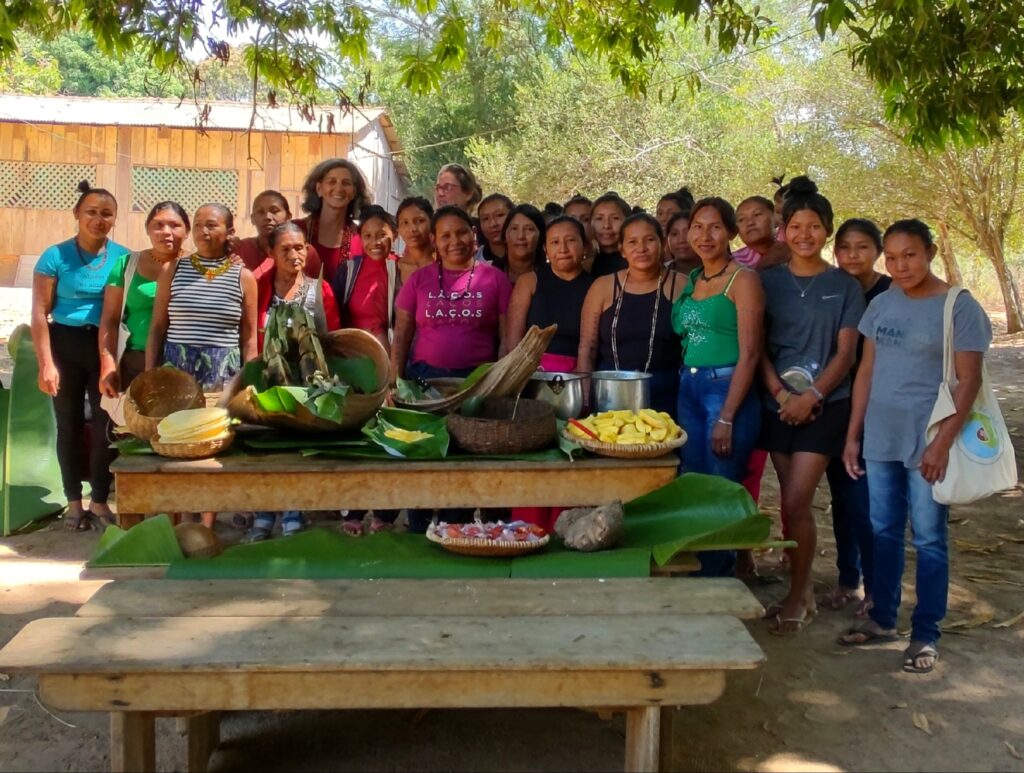
The activity that has happened in the village and the Foot of the Birds, the Land, the Indigenous (IT), Japuíra, in which participants used local ingredients, to the preparation of traditional food during the early days of the business. “It was a workshop, with no-stove, no refrigerator, and no high tech equipment, but with great simplicity, ancient wisdom, and the knowledge of nature, and, above all, an exercise of the sovereignty of the food coupled with the cultural identity,” said Neide Rigo, a dietitian is responsible for the conduct of the workshop.

When it comes to cooking, Despite that, one of the participants of the training, She Manai Rikbaktatsa, in the village of Parajuba, IT Concealed, revealed, in a family situation that has aroused particular interest in the subject. His mother, Frances, was recovered from a frame and delicate in health care after the doctor prescribes exclusively on the power of traditional treatment. “Yes, she is already good, but now I only eat from our food, all natural, and then you can learn many recipes for it,” he said.
The implementation of the community-based tourism is envisaged in the Plan of Territorial and Environmental Management (PGTA) of the people Despite that. The workshop is part of the design process and aims to strengthen, by means of the enhancement of the traditional food, the ability to generate income and food production.
“It’s not just thinking about the menu for the activities of the tour, but Despite that, will arrange in-house to produce these foods, as they prepare to deliver these meals, and have a fair price for that money to stay in the area. In this training, you also have the perspective of enhancement of food security,” said A Bar, a consultant to the business community, and the adoption of the programme, which is also responsible for directing the actions of the implementation of tourism activities.
Savour the flavours

Photo by Jerry Paniago/OPAN
On the first day of the activity, and after a conversation about the species, with traditional, seasonal, and a general understanding of the power in the villages, Despite that, the women were asked to collect the ingredients in the backyard and the gardens on the outskirts of the village, to build a menu of all of that is available on-site. Soon the table was full of yams, bananas, urucuns, city, patuás, cassava, and other things.
The next morning began with a party to the making of the bread and cassava flour. Peeling, grating, juicing, crumble, and cloth. All the stages of production are divided synchronously with small groups.

They have been prepared with three types of bread: just a mass of cassava, banana da terra and green blended in the dough and the corn is sweet and the cassava pounded into the mortar and pestle. The latter is not taken away by the fire on a frying pan, but on a stone with a flat, rounded, it is only found at the top of the hill.
The soft corn is a variety of cape verdean creole, with corn on the cob more fine-grain-colored and fluffy. At the time of the workshop, the space was purchased from the family of Maria Luiza and her Eriberto, who had the ears of corn on the constant smoke from a fire tender. “The smoke that is preserved,” said Mary Louise, while cutting the best from the tropical to the making of handicrafts.
At the end of the morning, and in addition to the three types of bread, which was served a meal with a banana on the ground, soft corn, and cassava, roasted on the same grill used for the preparation of the fish (pacu) peva, and piau). A special detail is that of the bread with the mass of the part of the earth is green, and the fish were baked in the sheet of a large number of, a plant that is native to much like the banana and gives it flavor, and the beauty of the plates.

Finished the bulk of manioc (cassava), were a continuation of the preparation for the flour in the afternoon and evening. The mass of sieved has been poured over a pan-black, with almost two feet in diameter, placed in turn on the grill gentle so as not to burn or to prevent it from sticking to the dough. Two women at a time, armed with squeegees of wood, so as not to scratch the bottom of the pan, they were going to keep stirring and rolling constantly is the mass, while in a conversation, good-humored temperava activity.

After the stories, the laughter, and within a two-hour relay at hand, mrs. Bernice Wyidyk of the village, Acorizal, IT Japuíra, tasted, and approved of flour: “it’s by the hostel.’ When you’re like, well, sequinha, pop them in your mouth,” she explained. The point has also been praised by Neide Rigo, who is ranked as the freshest and most delicious I ever ate, as well as highlighting the process of making it would be a treat to the tourists.
With a bit of local color

The main character in the early morning of the third day, he was in the annatto, or better yet, urucuns. In the fast-gathering for the village, were identified in four strains. “I’ve never seen this in the bark is smooth and this is white,” said Neide Rigo. This smooth, I don’t. I’m going to take you to one of my village,” added mrs. Bernice. After comparing the prices and the pigment of each one, and took out the beans for the making of paprika oil and annatto.
The afternoon was spent in the rolls, it is not a traditional food, but it is consumed on a daily basis in their communities. Neide suggested adding a pinch of local ingredients, the recipes, the conventional, and thus were made of three different types of bread: one of annatto is added to the batter, and another with genipap paint diluted with milk), and the other on the basis of the will, which would also be a sweet potato, banana da terra, a pumpkin, or cassava.

Not only because of its bounty of loaves of bread, Liliane Painiu, in the village of Cherry wood, IT Japuíra, is still prepared for a delicious cake: cassava from one recipe with just a few ingredients (cassava, grated eggs, milk, butter, baking powder, and sugar. In accordance with the bread and the cake was taken out of the oven, the community would gather under the shade of the green hose in the central plaza of the village. The feeling is of wonder and curiosity, after all, a few loaves of bread were orange and the other blue, as a result of the use of annatto, and lip discs in their preparation.

After the meal, it was concluded that it is the flavor and the tenderness was so attractive and the colors. “We have a lot of food that we didn’t even know you could do this, such as annatto, and lip discs in the form of bread. I hope that women will continue doing it, and each light to their community,” said san Francisco Despite that, the leader of the village on the Foot of the Birds.
Chichas and a lot of food

Photo: Jerry Paniago/OPAN
On the fourth day was devoted to a chicha, a traditional drink, very tasty, and nutritious food that is made from different types of food, which is eaten at any meal, and is part of the daily lives of the families. Some people are preparing a fermented beverages, fermented, but Despite that it is ferventada, or lightly cooked until the juice thickens and take on the consistency of a paste between the mush and mush, and remain some of the pieces of solid melt-in-your-mouth. It is sweetened with sugar or honey, and can be eaten hot or cold.
The women did as corn beverage and a soft, yams, and bananas to the green earth, but you also tend to make from sweet potato, manioc (cassava), inajá, and other food items. To drink, to give it substance, it is normally prepared in large containers and used on cups or mugs. At the time, it was served with quentinhas with dumplings deep-fried in corn, sweet, and to be, leaving you on the menu’s even more irresistible.
The last day was reserved for a true feast. The women were divided into to put into practice all the things that had been done during the workshop. “A lot has to fish pacu), piau, and matrinxã, while the other was to collect as patuá to fermented beverages. One came from a bike with a bag-of manioc (cassava), while others came from the leaves of a large number of nearly two meters in length. The wood has been introduced to the fogueirinhas that is cooked yams, tostaram of the bread, and they roasted cassava, and bore the brunt of grids for all the fish”, he recalled Neide.
So, at the end of the afternoon, and the table is covered with the leaves of a large number of under-the hose was bursting at the seams of the dishes are fresh and tasty. Chichas of different flavors, cakes, colorful, fish, baked goods, bread variety, porridge, poultry, flour, manioc, cassava, and yams and cooked, the juice of patuá, rice in the mortar and pestle with achiote, and cakes of corn, sweet, and to be deep-fried.

Each participant of the workshop, there was also the goal of a proposal from the menu, containing protein, carbohydrates, healthy fats, and fiber. A nutritionist Neide Rigo is currently preparing a book with all the recipes were made during the activity and to make available to the women. In addition to this, we have created a group on the messaging app through which women to follow, exchanging experience, and to share every day dishes recipes, which are, in their respective villages -.
The steps for the implementation of the Community-Based Tourism
In 2024, it has been developed in a participatory with the people, Despite that , to assess the potential for tourism of the three areas and IT Erikpatsa, IT Japuíra, and IT’s Hidden). After the completion of the document that is being performed, the processes of the formation to the start of the implementation of the community-based tourism.
The shop of specialties and traditional cuisine, Despite that took place between the 11th and the 15th of August, there was a great potential for the tourism and food and the appreciation of the culture and the food. In addition to this training, Despite also have skills in the conduct of the tourists, the formatting script for cultural immersion and tourism, bird watching.
The design of the community-based tourism that is expected in the PGTA to the Rikbaktsa, and the implementation of the PGTA is one of the main priorities of the project, the Birthplace of the Water, carried out by the Operation of the Amazon-Native (OPAN), working with the people Despite-and Apiaká, with the support of Petrobras, through Petrobras Socioambiental. This is the fourth edition of the project, which is supported as of 2011, the management of the territory of the people in the valley of the Juruena river.