
The number of CGHs-fold in six years, in the basin of the rio Juruena
Between 2019 and 2025, the number of Hydropower Plants (CGHs) has grown from 42 to 88
The monitoring of the pressure and threat of the indigenous lands in the basin of the rio Juruena , shows the rapid advance of new hydropower projects in the region, with potential impacts on their territories and ways of life of indigenous peoples. The study, published this month, and signed with the team in the Operation of the Amazon-Native (OPAN), are shown a scene of an intense concentration of the enterprises, mainly Small Hydro power Plants (power Plants) and power-Generating Dams (CGHs).
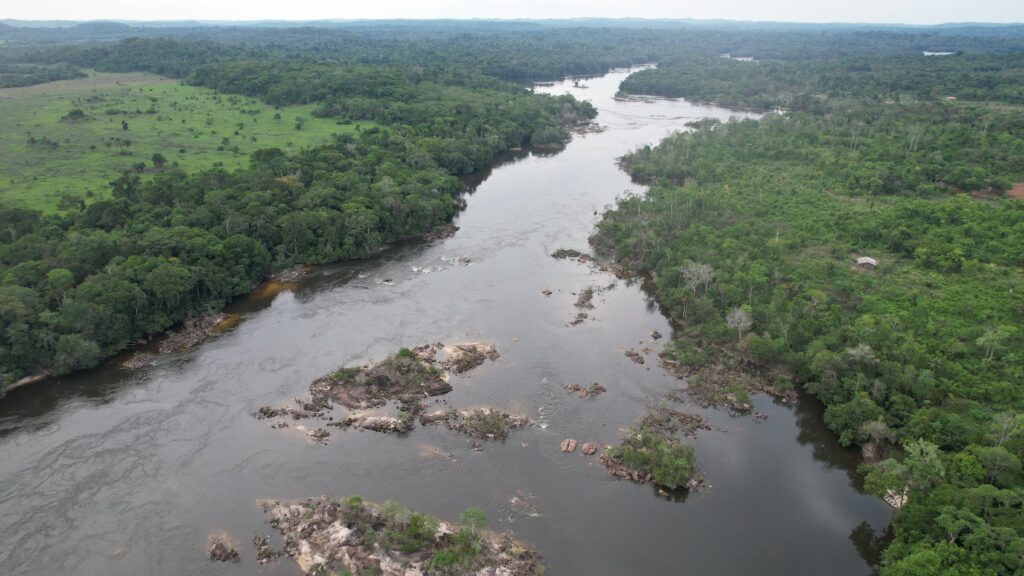
In the analysis, which covers the period from January to December 2024 July 2025, we identified a total of 185 hydroelectric projects in the valley of Juruena rivers. Of these, 48% were CGHs, and 39% of these are power Plants, demonstrating a clear inclination towards short-term projects, which, in spite of the scale, and do not fail to impose a significant risk. The study showed that 66% of the projects are still in the planning phase, indicating a potential for the growth of plants remarkable for the next few years.

One of the biggest concern is the growth of the CGHs, the number in the basin is more than doubled in 2019, and 2025, increasing from 42 to 88 units. This rapid expansion is directly related to the simplification of the procedures of the regulatory sponsored by the National Electric Energy Agency (Aneel) in 2020, and that has brought these efforts to more in-depth studies such as the Study of the Environmental Impact assessment (EIA) and Environmental Impact Report (EIR). In addition, the CGHs are often subjected to an Environmental Report before the adoption of the Simplified remote access service (RAS), which is considered superficial and insufficient to assess the social and environmental risks in critical areas.
Rivers are the most at-risk
In the study, it was demonstrated that a sub-region of the Kite to have the largest number of projects under the planning (42) and is home to the sequences of the Units in the course of the river, the Louvre. This cascading raises concerns about the connectivity, the water, the migration of aquatic species, and, as a consequence, the impact on the indigenous people who depend on these ecosystems for their livelihoods and culture.
“The report shows that the speed of concern in the licensing of the CGHs. For example, the CGHs Janeque and of the Holy Jesus, in the sub-basin of the Parrot, and are located in the river, Which, next to the Land of the Indigenous people, they have obtained the Licenses for Prior (LP), and Setup (READ) is in extremely short intervals,” he said to the indian, and started The Felipe Rodrigues Pereira.
With the fast-paced, raises serious questions about the scope of the environmental analysis and, importantly, the effectiveness of the consultation with indigenous communities is a fundamental right guaranteed by the Convention 169 of the International Labour Organization (ILO).
“This is in stark contrast with the time that is required for the communities to carry out their own processes of deliberation and the collective, committed to the right to prior consultation, the free and informed consent,” says the lawyer, ‘ Mariana Lacerda.

Another point of critic pointed out, is to be exempted from the EIA/RIMA), for the power for Crystal-clear, which is located on the Juruena river. This plant is located in an area of 20 power plants, and in the absence of a comprehensive study of the impact of drops and the effects are cumulative, and synergistic in the region.
When the fish is missing
The study shows that the people of the Enawene Nawe are already suffering from a shortage of fish, it is a problem that affects not only the food, but it is also the key aspects of spirituality, such as the completion of the ritual, Yaõkwa.
The ritual, which is recognized as an Intangible Cultural Heritage in Brazil, the Institute of Historic Heritage Artístico Nacional (IPHAN) and the Unesco, is under threat due to a decline in fish on the Juruena river. The Yaõkwa, it runs for approximately seven months, it is fundamental to the calendar service of the Enawene Nawe people’s ritual, combining the dimensions of social, cultural, spiritual, and eco-friendly. During the trial, the Enawene Nawe establish a connection with the spirits of the underground Yakairiti, providing staple foods, such as fish, salt, vegetable, corn, and manioc (cassava), in the ongoing quest for the maintenance of the cosmic order and the social order.
The full implementation of the Yaõkwa depends on the health of the rivers, and in the presence of a migratory fish, because of the fishing collective, the dam is an integral component of the ritual. However, since the installation of the Energy Complex of the Juruena – is made up of eight Units of the companies, Good for the Future, and Amaggi – launched in 2007, the Enawene Nawe are witnessing a sharp decline in the abundance of fish. The species before they are piau, pacu, matrinxã, jau, painted, and cachara, rare, severely impacting not only the diet of traditional food, but also in continuity of their sacred rituals.
“In the face of such grace period, the Enawene Nawe, have been forced to take the fish from the tanks, and reservoirs for the maintenance of the rituals, the collective fishing in the reservoir is one of the main components of the ritual. This situation is evident, not only the damage that can be caused by hydroelectric power plants, but also of the fragility of the countervailing measures, and safeguard the cultural front, the size of the large enterprises,” said the indian, Ricardo Carvalho.
The data of this study
The methodology of the bulletin was involved in the collection and analysis of data from public sources, such as rio de janeiro, Diaries, Official, DONATE, and GIVE to the Built-in Monitoring, Licensing and Environmental Simlam), and the geo-portal of the state of Mato Grosso. The spatial analysis for each sub-basin has enabled the identification of patterns in the concentration and the rate of implementation of the project, and revealed that all the sub-basins of the Kite, and the River of Blood that is concentrated a large part of the developments in the planning stages.
The study will also alert you to a backdrop of increasing pressure on native lands within the watershed of the Juruena rivers, driven by the expansion of the power plant. The flexibility in licensing, the potential under-estimation of the impacts and the weakening of the right to prior consultation of points that require urgent attention of the regulatory authorities, public authorities and civil society in order to ensure the protection of the territory and of the rights of indigenous peoples.
The momentum of the progress of the projects hydroelectric power plants in the basin of the Juruena-driven simplification of regulations for the CGHs, it also draws the attention, and points to a future that is, with the consolidation of large power plants.
According to the study, the impacts of synergistic and cumulative on the aquatic ecosystems that are already apparent with the reduction of the surface of the water, and a significant increase in the number of irrigated areas. In order to mitigate these effects, it is recommended that the adoption of tools such as the Integrated Environmental Assessment (AAI), is the strengthening of the Committees of the River Basin (CBHs), with a view to the planning and management of sustainable water resources management. In addition to the construction of a Plan of Water Resources, which is specific to the Juruena to guide you to a fair-use, efficient, and well balanced in the water in the.
Access to the complete study of the pressures and threats to Indigenous Lands within the Watershed of the Rio Juruena here!