
The history of women in the xavantes indians collection of seed which is to be recorded in the book of
The ancient culture of collecting seeds, contributes to the recovery of the territory, and the empowerment of women, and the generation of income.
Maria Teresa Cunha – Internship in journalism from the OPAN
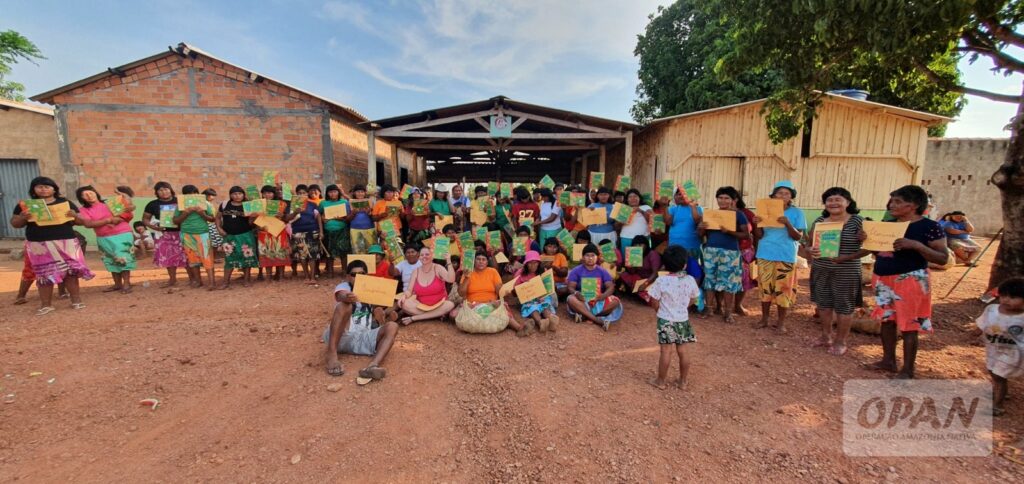
The women of the Xavante collection of seed from the Land of the Indigenous (IT) Marãiwatsédé, as in the original language of people, is called the Pi-õ rómnha ma ubumrõi’wa, you need your track record in the book. The work of the indigenous people of Carolina Zaratim, the work is addressed from the perspective of the networks, and it should be released in December of the same year.
The seed collection is part of the traditional culture of the women in the Xavante, and has become even more relevant, given the history, IT Marãiwatsédé, which has lost about 70% of the native vegetation, during the period in which the people are kept away from the area. Retired in 1966, by the brazilian military dictatorship, the Xavante were only able to return in 2004, the occupation of the settlers and farmers came in the year 2013.
In addition to the income of the working of the networks it is important to allow for the recognition of the territory, thus contributing to local and regional management and the recovery of the vegetation. This work strengthens the culture, in addition to being a way to contribute to the monitoring and the adoption of the programme” adds the Carolina Zaratim.

Several old ladies that were taken out of the territory for a lot of young people, as the cacica Carolina Rewaptu, who was only six years old. After recovery, she has seen the establishment and strengthening of the group’s networks. In its initial stage, the group consisted of only a few old ladies, but it is currently made up of nearly 200 women of all ages, and in the villages.
In the process, partnering with the Operation of the Amazon-Native (OPAN), and the Seeds out of the Xingu river are important to the structure of the work. “With the support of the OPAN, we have learned to identify the seeds, and translate it to our language that is native to the Portuguese,” he says of the cacica Carolina Rewaptu.
A collection of cannabis seeds is a custom passed down from one generation to the next. The activity involves the whole context of the sharing and exchange of know-how, which leads to the strengthening of traditional culture, and the relationships between women of different villages, as well as increased knowledge of the area and its resources.

By 2024, we have collected 3,38 tons of seeds of about 35 species. Accounting has been done by the Seeds out of the Park. From these a total of 1500 pounds have been sold, generating an income of nearly$ 125 billion, divided between the women. Others, 294 pounds, has been earmarked for the reforestation of the area.
Organized into three chapters, the book is intended to record the entire history of the group and the process of recovery of the territory, through the strengthening and restructuring of the bus, up to the present day, and the new perspectives of women, such as the creation of an agency, the process is in progress, which should increase the empowerment of women, the Xavante.