
The struggle is indigenous to the COPs: in a difficult way, but it is consistent
In a round table discussion during the 1st Meeting of the National Communication Indigenous to the Minister, Sonia Guajajara, he emphasized the historical achievements of the people indigenous to the COPs
AI generated audio
Participate in the negotiations of the Conference of the Parties (COP) is a major challenge. Your access to, our official shall be limited to heads of states, government ministers, diplomats, and organizations with observer. In spite of this, year after year after year, the indians have a presence and finding ways to gain access to these discussions, on a port that has been opened.
But without the right to vote in the formal negotiations, as the whole of civil society, indigenous peoples have been fighting the Climate Convention for the recognition and effective action against the climate crisis. Over the years, its incidence has resulted in significant progress, albeit slow, to shape expectations for the upcoming meeting of the Conference of the Parties, COP30, which will be held in Belem, Brazil.
Historical achievements, and recognition
Between 2009 and 2015, and an intense collaboration with the Coalition of Environmental Organizations and Indigenous peoples in Latin America and the Caribbean (COICA) which culminated in the recognition of the knowledge of indigenous peoples and local communities, such as scientific knowledge, through the United Nations and the Agreement in Paris, as it reminds us of the minister, Sonia Guajajara, who participated in the panel on “the Participation of Indigenous Spaces in International Climate negotiations at the 1st Meeting of the National Communication to the indians, on the River.
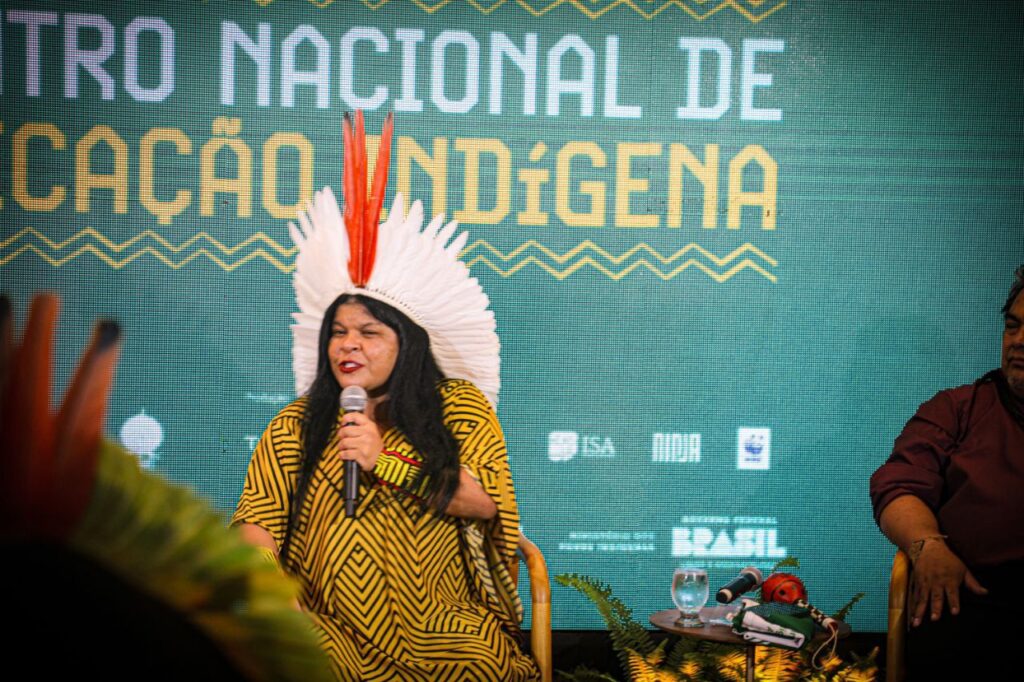
Indigenous peoples have been recognized as a fundamental step in order to face the emergency of climate change. After that, they continued the conversation, and that doesn’t happen just at the cops. It was then decided that we had to have a platform to talk about it. on This platform brings together Germany, in Germany and the indigenous movement has its offices are the seven cultural regions in the world,” said the minister, in a reference to the Platform of the Local Communities and Indigenous Peoples (LCIPP).
In the event that, Sonia Guajajara, gave an overview of the achievements of the indigenous people, noting that in 2015, the Declaration of Human Rights was seen as the recognition of the people as an alternative to the key to dealing with climate change.
The minister also stressed that indigenous participation in the Psc has been growing: in 2019, in Madrid, there’s been a lot of representation, and in Dubai (COP28), over 350 indigenous people were in attendance. However, the disparity in number in relation to the representatives of the large companies, with an aspect ratio of native to seven of the lobbyists, the book highlights the need to further expand it.
The challenges and expectations of the COP30
For Sonia Guajajara, of the COP30, in Bethlehem, is an opportunity for Brazil to melanie with the biggest and best indigenous participation in a conference on climate change. In this sense, to surpass the number of participants in Dubai, it is critical in the search for a representation which goes beyond that of the amount and to ensure that there is a presence of a quality, hands on, and effective communication in all areas, including in the blue zone, which is the area of the negotiations among the countries in the green zone, a space that is open to all, and to the side events.
In the assessment of the minister, one of the major bottlenecks in the negotiations on the funding of the climate. “Only a very small fraction of the capabilities advertised by the country comes effectively to the country, and of that amount, a portion still in the lower reaches directly to the organizations, indigenous peoples’.
“The paperwork and the intermediary agencies make it difficult for the cash flow, they often do not arrive at all, or is directed in ways that are inappropriate. The fight for funding is a direct and accessible, it is an agenda that is central to the COP30,” added the minister.
Within the framework of the national policy for the inclusion of terms such as ‘protect the forest’ in the Contributions of the Nationally Determined (NDC) in the region is a positive development, according to Sonia Guajajara. However, it is expected that Brazil will open the NDC to incorporate the proposed indigenous peoples, such as the demarcation of indigenous lands, and the protection of territorial and National action Plan for Energy (PDE), as a measure for the mitigation to be effective.
The evidence of the removal of the invasion of the territories of indigenous peoples, held by the MPI, and other agencies, it has contributed to the reduction of emissions from deforestation and highlights the importance of these actions for the achievement of the targets for the reduction of air pollution.
“What do we suggest when it comes to the politics of mitigation, there are three measures included the demarcation of indigenous lands, and the protection of territorial and PNGATI [Política Nacional de Gestão Territorial e Ambiental em Terras Indígenas]. Native land that is not recognized as a mitigation measure. These operations are made through the LINKS, it was confirmed that the withdrawal of the invaders contributed to the decline in deforestation,” said the minister.
On the geopolitical scene, and communication
The rating of the prime minister’s global geopolitics, and the negacionismo the climate pose a significant threat. The difficulty of the rich countries to fulfil their commitments to the climate, the allocation of resources to the war in time of action on climate change and the emergence of discourses of denialist, and hate speech, powered by the fake news, they also create an environment that is challenging.
In this sense, the fight against disinformation, and the strengthening of the communication are the cornerstones for ensuring that the achievements of the indigenous people are recognized and valued by society in general. In addition, it reinforces that it is necessary to show the public the value of the struggle and the progress being made, ensuring that the members of parliament and elected representatives in respect of the rights of indigenous peoples.
The achievements of the COPs to demonstrate the resilience, and the importance of native peoples in the fight against the climate crisis. Already COP30, in Bethlehem, is emerging as a chance to consolidate these gains, pushing for funding more equitable, to strengthen the representativeness of the policy and the fight against the negacionismo, to ensure that the voices of the ancient knowledge will be central to the solutions for the future of the planet.