
COP 30 am: local communities to strengthen their participation in the climate agenda, with the launch of the Global Forum on
A new instance of the international to the dialogue with stakeholders, in spite of the progress of shy.
By Andreas Fanzeres (OPAN), and The Pine tree (From)
For the first COP on the brazilian is finished with a subtle step forward in the direction of greater involvement of local communities in the Convention. The government decided to make the most of a workshop on the subject in 2026, while 64a session of the Subsidiary Body on assessment of Science and technology (SBSTA), and in June, Germany, and signaled that it would consider formal reports on the actions taken thus far in the process of engaging the community in the review of the Working Group, the Facilitator (FWG) of the Platform of Local Communities and Indigenous Peoples in the UNFCCC, the COP32, in 2027. It seems a long way into the future for a case that shocked Germany in this year, gaining traction and visibility in the city of Belém (PA), as a result of a strategic move and the final of the local communities in different parts of the world.
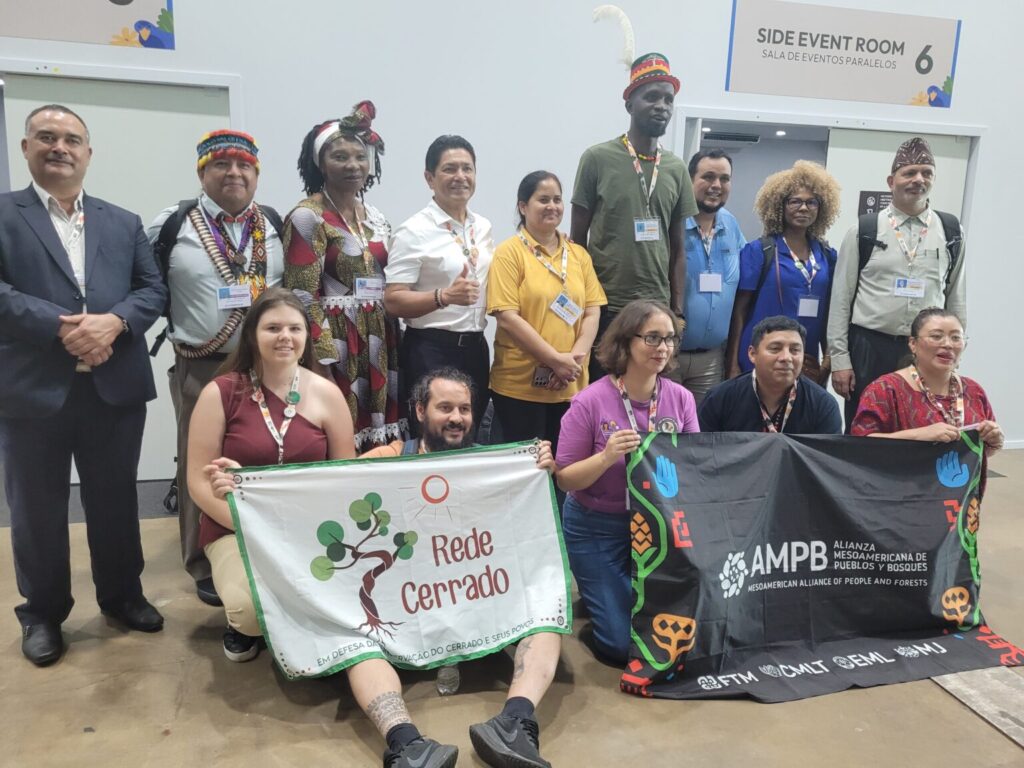
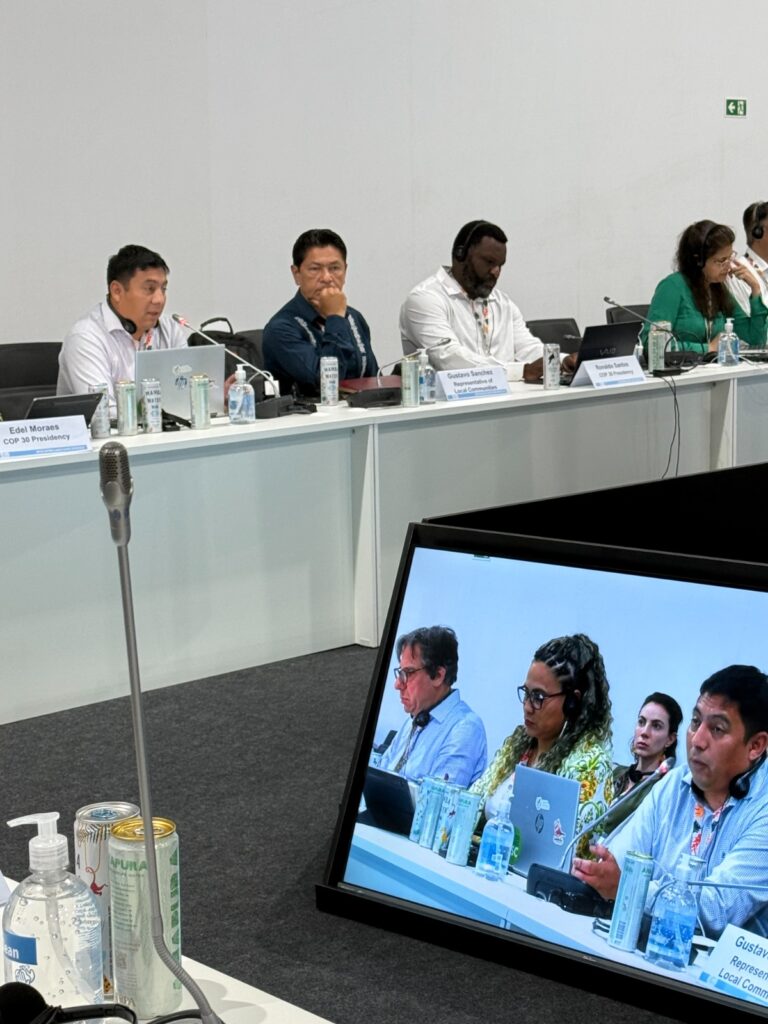
Before the start of the official agenda on the COP30, between the 4th and the 7th of November, representatives of the communities that were most strong, and if they are present during the 14th meeting of the FWG. On the 10th day, in the Conference in Bethlehem, it really started to rain and deafening that it was echoed on the structure of the Blue Zone has been called a blessing for the one who was trying to speak into the microphone at the Workshop on the involvement of the Local Communities, organized by the chair of the COP30. It has forced the local communities, local governments, organizations, observers and the bodies established in the Convention, to listen to each other more closely. “In this rain, announces that it is something, which wasn’t much, it is going on,” said Robert, Karoro, Kiribati, new caledonia.
After the completion of the other two conversations on the subject – one in Addis Ababa, ethiopia, during the Week of the Climate of Africa in September, in Brasília, at the Pre-COP, and in October, it was time to take a step that is only to the local communities were able to provide. And you gave it. Now, they want to be more to it than just being referred to as relevant for the action on the global climate in the discourse of the traders. “After a process of several years, we are proud to announce that we have our Global Forum on Local Communities and Climate Change”, he spoke, Gustavo Sánchez, the president of the Mexican Network of Organisations in Rural Forested area Network (Mocaf). Representatives from Latin America and the Caribbean, Africa, and Asia, the group wants to be recognized as a party to the communities in the face of the Climate Convention, and it can act as an independent and autonomous in the definition of its members to participate more actively in the discussions on weather. This advertisement has paved the way for the countries and bodies of the UNFCCC, unable to live up to the promise in the COP30 a stronger engagement of the communities that from here on out.
“At the direction of the president, Lula has been for you to do anything to get in the center of the debate, the people who suffer the most from climate change. This is why the COP was held in the heart of the Amazon to gain a sense of history. To make the COP30 in the Amazon, is the recognition that the action of the global climate starts in the region, and strengthen the voices of caring for centuries, this ‘common home’, said the minister, Anielle Franco, in the Ministry of Racial Equality (MIR).
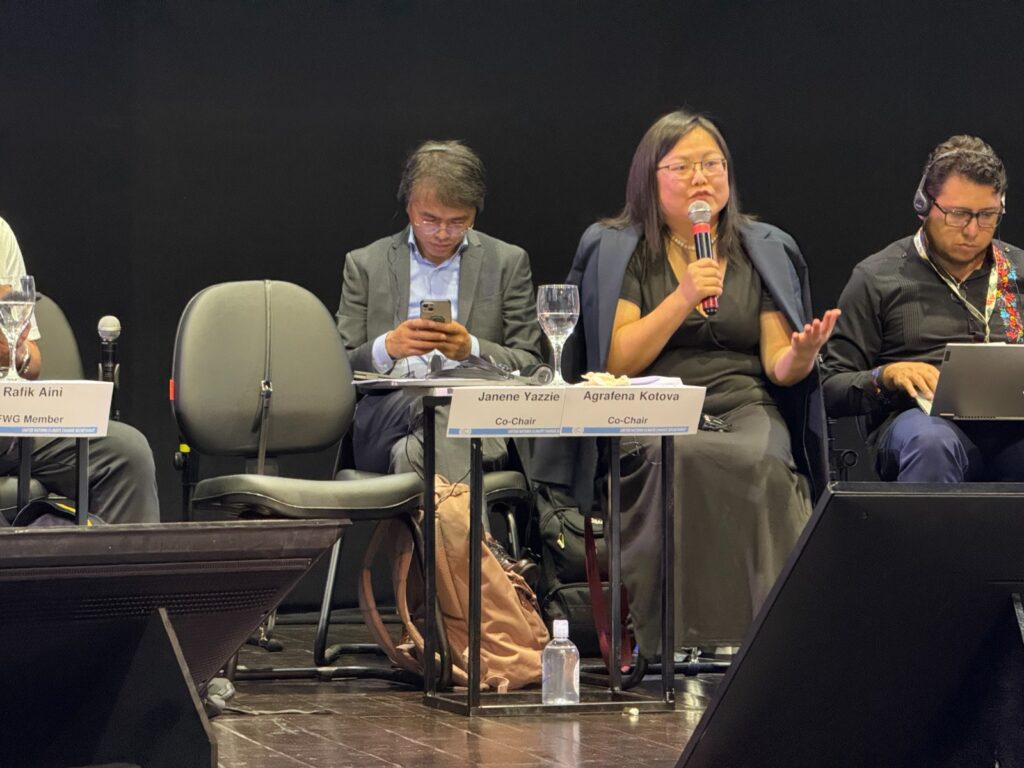
Agrafena Kotova, and is co-chair of the Working Group, the Facilitator of the Platform of Local Communities and Indigenous Peoples (FWG), a unique body, made up of the Convention is dedicated to the indigenous peoples and communities, recognize problems, to facilitate the implementation of its functions, because of the limited participation of local communities. With a little bit of support, just in the past few years, they have achieved improvements in the coordination of the international in order to be present and active on the Platform,the space that, until then, considered to be hostile to these groups. “On the representation of local communities, will be considered to be in conformity with the decision in 2024,” he said Agrafena, referring to the COP24, held in Katowice, Poland, in 2018, when the country decided that, in addition to the 7 members of the indigenous people and that of the 7th of government, with three seats at the FWG, would be dedicated to our local communities.
But not all the criteria and procedures for the filling of these positions have relevance among the members of the Platform are responsible for the construction of a plan of work of the Platform, until now, there has never been interest in or to the forecast for the next in the occupation of the space.
Slow progress
Janene Yazzie, who was the representative of the indigenous of North America, who also served as co-chair of the FWG, listed on the recent progress in the awareness of the community, such as the fact that, for the first time, a representative from the local communities, and was invited to speak at the opening of the session, after which the indigenous peoples. He also quoted in the call for participation of local communities in the activities and mandates of the Platform, working in small groups (with a demand to say vocalized by the local community and this year, in Germany, and the indication is that there will be time at the meeting of the definition of the priorities of the states in 2026 in order to discuss how to improve the involvement of local communities.
Sanchez has reiterated, as he has done on all of the opportunities that come built up over the years, the Convention has proposed to strengthen the participation of local communities, and to recognize similarities and differences between the communities in relation to the other groups. “Our approach is based on the fact that we have a history and a culture in common, and in the autodescrevemos as a result, and she recognizes it as a party, we carry out the management, unless otherwise noted, all of our territories, in a relationship, especially one with nature, and our corporate governance and the representation of their own.” According to him, these criteria shall be an umbrella for you at the global level, to recognize and protect the rights of all communities in the area. For this purpose, in the name of the newly created global forum, that there is an opportunity to formally present and discuss the adoption of these standards by the Convention, in the workshop, the Subsidiary Body for assessment of Science and technology (SBSTA) in 2026, and that, at the end of the event, it turned out to be one of the named individual in the COP30 to the local community.
For many years, the lack of discussion on the criteria of self-identification of local communities, and was seen as a major obstacle to progress in the recognition of these groups are, by Convention, the Weather, because in the end it can also be used in contexts different from one another.
The lawyer of the congo, Albert K. Barume, the current United Nations special rapporteur on the Rights of Indigenous Peoples, he considers that the concept of the local community, this is something that should be defined by the member states, while the indigenous point of view, internationally, as well as to see the risk in recognition of the community. “A lot of States are the driving force of the category of the local community, with the intent to demean indigenous peoples ‘ rights over lands and resources, at the same level as that of the rights of local communities. This way, you can keep track of these rights, and the set of his reach, to expropriate, to limit, to do what you want. A second risk is that, in some regions, such as Africa and Asia, to the land that was taken from indigenous communities in the area. As I wrote in my report: if you set the actor’s dominance, and his victim is under the same legal protection, and is committed to the fate of the victim”, she said, in an interview with the newspaper O Globo, while the COP30.
A discussion of the concepts, however, is more nuanced. “For several years, the armed conflict desterritorializou a number of brothers and sisters in other countries. Many people discuss it in those terms on which category you fit. For this reason, I support the creation of a separate space for the local community. We, the indigenous people, they also suffer from the deadlock, and many others. People will ask you if you’re indigenous, and african descendants. To our brothers and sisters have this support for the creation of a Caucus for the local community. We are ready to show measurable results in the management of forest, agricultural, and programs that are specific to women’s and young men” said Selvyn Perez, the organization stays Utz’, ‘ A.
For Samuel, he did, as president of the National Council of the Peoples and Traditional Communities in Brazil (CNPCT), the formation of a Caucus of the Global and local communities has not been a symbolic gesture, but a political one. “It was a movement born out of the ground, in the dialogue between the continents of the world and the assurance that no action on climate to be fair, it’s still not in the presence of the people who live in and take care of those areas,” he said. The son of the green Dende Caetano veloso (who died on Sunday, 23.11), Samuel highlights the symbolism of the Caucus of the communities to be released as a COP in front of you. “This is the true legacy of the COP. it is for us to put on the agenda of the climate, along with our brothers and sisters. In the name of my father, in Mendes, and many others, and now we’ve rewritten history, is now with the other continents as well. It is a unification of the struggles in the world. Don’t have to walk back in the future as well!”.
Simon Longoli, pastoralista in Uganda, offering perspectives that can strengthen climate action, saying that the communities are pastoralists of east africa, it is important to understand the ivity of the people, as an adaptation, and that Africa should not be left behind. “Our stories are supposed to help in the construction of knowledge about the climate,” he said.
The response of the Parties to
Geert Fremout, chief negotiator of the European Union, which has kept track of the two dialogues on the local communities, made by the president of the COP30, as well as the entire process of the construction and adoption of the Platform and of the Working Group, the Facilitator (FWG) of more than 10 years in the UNFCCC, said that the application to increase the participation of local communities, and it is legitimate. He did that in the space of the FWG is innovative for its incremental, but should be a constructive, inclusive, and transparent manner. “Right now, we have to define the next steps to include the communities of the FWG. The European Union, and in line with what he said Gustavo Sanchez, a representation that requires a process of self-selection,” he said. “It is urgent that the FWG to advance in the creation of jobs for the local community. There is no justification for the moral, political, or technical aspects of the current status of the deletion. In the time of the promise has already been fulfilled. Now it’s the time of the coherence, and the courage of the institutional,” said Samuel, he did, which is geraizeiro in Montes Claros.
For Samuel, he did, as president of the National Council of the Peoples and Traditional Communities in Brazil (CNPCT), the formation of a Caucus of the Global and local communities has not been a symbolic gesture, but a political one. “It was a movement born out of the ground, in the dialogue between the continents of the world and the assurance that no action on climate to be fair, it’s still not in the presence of the people who live in and take care of those areas,” he said. The son of the green Dende Caetano veloso (who died on Sunday, 23.11), Samuel highlights the symbolism of the Caucus of the communities to be released as a COP in front of you. “This is the true legacy of the COP. it is for us to put on the agenda of the climate, along with our brothers and sisters. In the name of my father, in Mendes, and many others, and now we’ve rewritten history, is now with the other continents as well. It is a unification of the struggles in the world. Don’t have to walk back in the future as well!”.
Simon Longoli, pastoralista in Uganda, offering perspectives that can strengthen climate action, saying that the communities are pastoralists of east africa, it is important to understand the mobility of these populations, as an adaptation, and that Africa should not be left behind. “Our stories are supposed to help in the construction of knowledge about the climate,” he said.
The response of the Parties to
Geert Fremout, chief negotiator of the European Union, which has kept track of the two dialogues on the local communities, made by the president of the COP30, as well as the entire process of the construction and adoption of the Platform and of the Working Group, the Facilitator (FWG) of more than 10 years in the UNFCCC, said that the application to increase the participation of local communities, and it is legitimate. He did that in the space of the FWG is innovative for its incremental, but should be a constructive, inclusive, and transparent manner. “Right now, we have to define the next steps to include the communities of the FWG. The European Union, and in line with what he said Gustavo Sanchez, a representation that requires a process of self-selection,” he said. “It is urgent that the FWG to advance in the creation of jobs for the local community. There is no justification for the moral, political, or technical aspects of the current status of the deletion. In the time of the promise has already been fulfilled. Now it’s the time of the coherence, and the courage of the institutional,” said Samuel, he did, which is geraizeiro in Montes Claros.
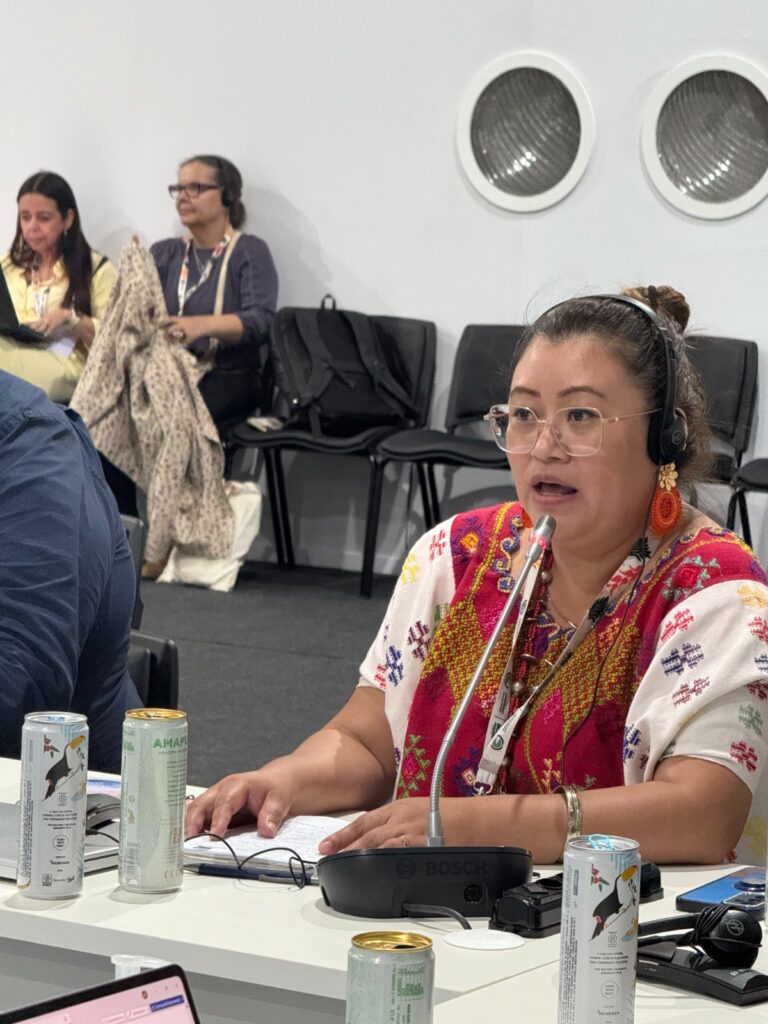
Thus Juc, leader of the indigenous Maya and the co-ordinator of the area to the Right, and the Culture of the Alliance of Mesoamerican Peoples and Forests (AMPB), he pointed out that the local communities have to speak up for themselves. “In Central America, we have been able to conserve and protect our ecosystem, because we have been working together in local communities, and the convergence of respecting our differences, and especially the us to join against the common enemy, what is this neoliberal system that is too young, and in our territory,” he said.
Jake’s Beautiful, by the National Council of the Populations in the Extractive industries (CNS), and the special envoy of the Chairmanship of the COP30 reminded me of the fight for the Amazon region in Brazil, that is unified, and it is essential for the conservation of biological diversity. “We have an alliance in 1989, family, indigenous, for the defense of the forest, and of our ways of life. Our future is up in the air. With effort, we are moving against climate change”, she said.
In the course of the event, but different countries as well as representatives of the constituent bodies of the UNFCCC, such as the Expert Group of the Least Developed Countries (LDC Expert Group, and the Committee on the Adaptation took place with the construction of the forum, indicating the urgent need for the jobs of each segment will be affected by this agency. After you have to remember that all areas of the Convention should be included in their communities, in their cases, Abze Djigma, she Mossi of Burkina Faso, as well as co-chair of the Committee in Paris on Capacity-building (PCCB) of the UNFCCC, said he is ready to work with the board. “I don’t talk to as a friend of the local community. I speak as a person who belongs to a community. The local communities that are not supposed to ask you to stand on a table. This is our right,” he said Abze Djigma.
The representative of the, Kiribati, and Fiji, to Robert Karoro, who is also a member of the FWG, he was reminded that there are a lot of local communities in the Pacific region that are interested in being a part of the Caucus. “Indigenous peoples and local communities to make use of this opportunity to show off the union, and, finally, to encourage the government to take part in the FWG and get involved in the activities of the Platform.
In this instance, the local Soft Ndjebet, the winner of the Award, There Were in the year 2022, and is the coordinator of the newly established Forum of the Global from the Local community, it was a speech that emphasized the role of women in the fight against the climate crisis. “We need to act collectively. Among the local communities, for the most part it is made up of women, the victims of the weather, and functions of nature. We need to have a place in this process,” said Cecile, who is also the chairman of the African Network of Women in the Community Management of Forests (Refacof).
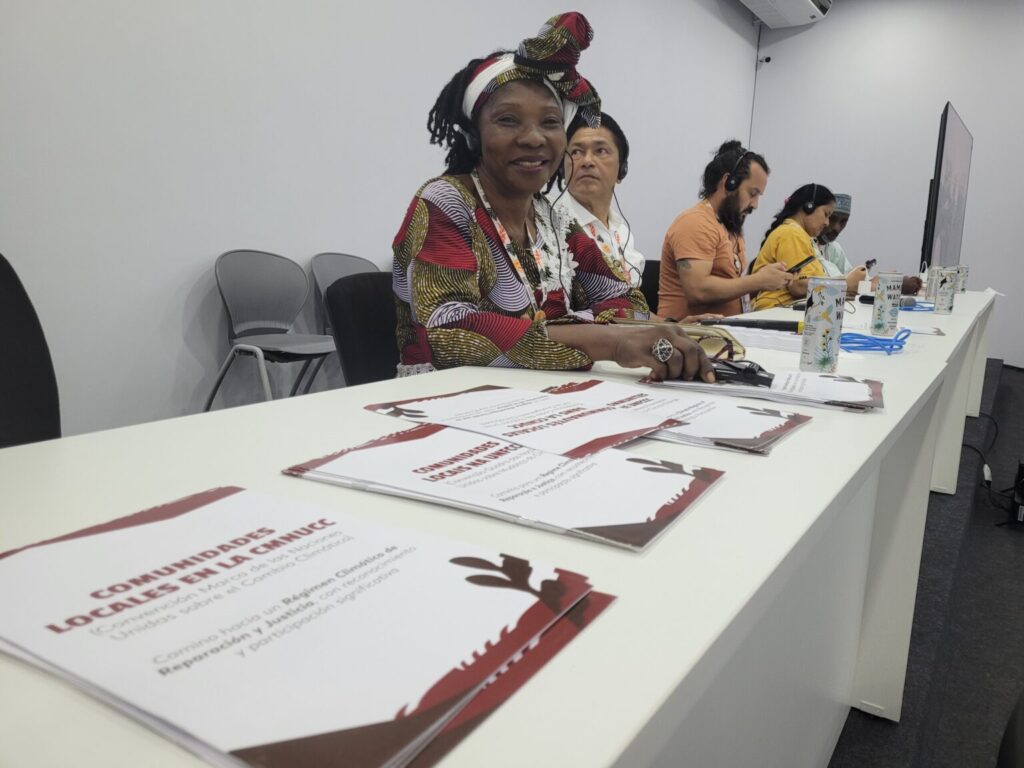
“The recognition from the local community at the FWG is not a concession, it is for a repair, historic and necessary step for the climate justice. Each realm is also a member of the sustainability and the community, a connection between the ancient knowledge, and the possible future. This decision reflects the spirit of the Agreement, in Paris, and of the declaration of the Rights of indigenous Peoples and Traditional Communities. As said, joão Guimarães Rosa, the life of the people is courage. This is the courage of the local community rise up, now, to take over the place, each having belonged to the protagonists in the construction of the solutions to climate change, fair, and long-lasting”, the company ended the Sovereignty.
The coordination around the inclusion of local communities in the LCIPP is supported by the From and to other organisations, such as the National Council of the Peoples and Traditional Communities in Brazil (CNPCT, The Centre-of-Life), the Institute for Climate and Society (cis), the Institute of Society, Population and Nature (ISPN), operação Amazônia Nativa (OPAN), the Network, the savannah, and international organizations such as the Alliance Mesoamerican de Pueblos y Bosque (AMPB), CLARIFI, CORET, the Federation of community Forestry Users, Nepal (FECOFUN), a Global Alliance, the The Green Foundation Nepal Institute of Development Studies (IDS), The network of African Women for Community Management of Forests (REFACOF), a Network of Mexican Organizations in Rural Forested area Network (Mocaf), Utz Che, and the Women’s Rights and Resource Network (WRRN).