
The indigenous people, and the COP30: the pillars of the new architecture of the global climate
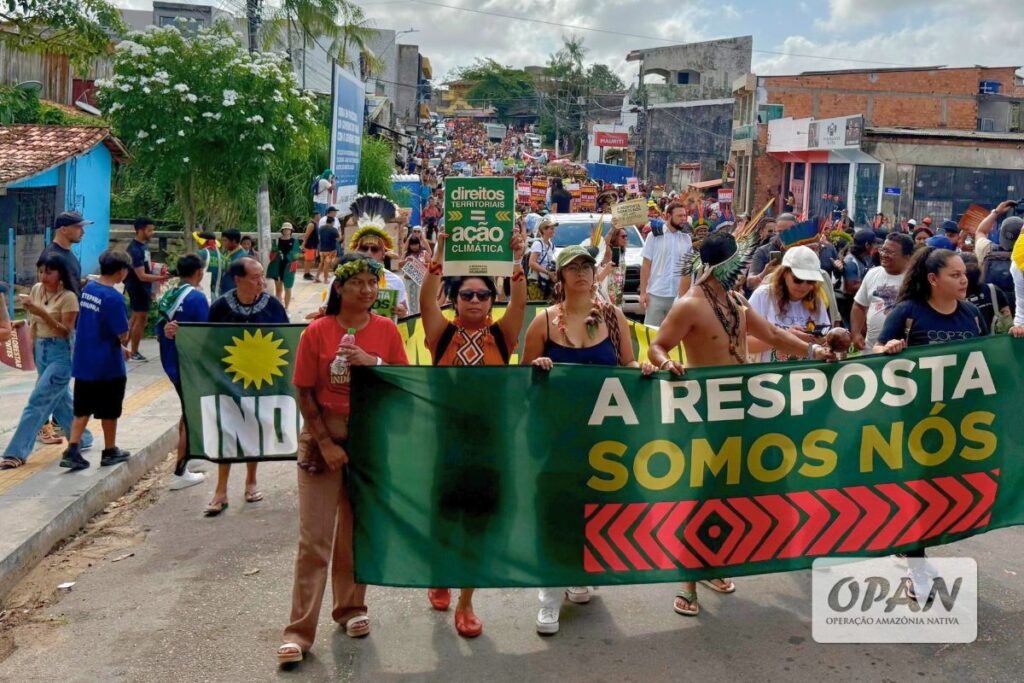
The COP is a 30-recognized indigenous peoples and people of african descent as an actor at the center of action on climate change. At the same time, the brazilian government announced that for the COP on the progress in the demarcation of their lands and settle for 38 indigenous peoples ‘ lands.
AI generated audio
Indigenous peoples and people of african descent were first recognized as central players in the global response to climate change in the final text of the United Nations Conference on Climate Change (COP-30), which came to an end on the 22nd of November, with the approval of the 195 countries worldwide.
29 decisions taken at the conference, which included advances in topics such as the transition is fair and financing, and gender reinforce the collective commitment to accelerate action, and to connect with the climate change regime on the lives of other people.
In the document, the task force for Global: Uniting humanity in a global mobilization against climate change, the inclusion of indigenous peoples is enshrined in the agenda of the human rights. The text not only treats the climate crisis as an issue of common concern, but it obliges Parties to ‘respect, promote and consider their respective obligations on human rights’.
They are explicitly mentioned on the rights of indigenous peoples, as well as their rights to land and traditional knowledge’. This legal framework raises his status in the groups to be protected from the key stakeholders in the conservation, recognizing that his or her rights are intrinsic to a clean and healthy environment.
The Mitigation Strategy reinforces this view by highlighting the ‘vital role of indigenous peoples and local communities’. The document points to the need to support them to actively participate in the management and sustainable use of the forests, and the importance of recognizing their rights to land and traditional knowledge’ as an essential component of the policies for the mitigation of the long-term.
The consolidation of the COP30, and a Package of Bethlehem
With the closing of the COP30, with the approval of your Package, in Bethlehem, and was still in that direction, noting that the voice and participation of an unprecedented indigenous peoples. “He was a COP with a greater participation of indigenous peoples in canada. In all of the rooms, the representatives have participated in and, technically, politically, and culturally. So, it’s been an active membership. And the indigenous peoples are more and more to dominate in the matter of the CLOSURE. It is not a matter only of scientists and negotiators, but they are prepared to even offer solutions in the following discussion,” he said to the president of the National Foundation for Indigenous Peoples (Funai), Joenia groups intersect.
The ministry of the Environment and Climate Change in Brazil, Marina Silva, the conference demonstrated the effort, of course, to get closer to the climate regime of the people and the land. “We have taken an important step forward in the recognition of the role of indigenous peoples, traditional communities and people of african descent. The transition is fair to have won the body and the voice. We launched the Fund in Tropical rain Forests, forever, innovative partnership that adds value to those who keep and maintain, in the tropical rain forests”.
The demarcation of indigenous lands
During the CLOSURES, the government of brazil has announced the breakthrough on the 38 and the processes of demarcation and settlement of indigenous lands, the primary claim on the climate agenda.
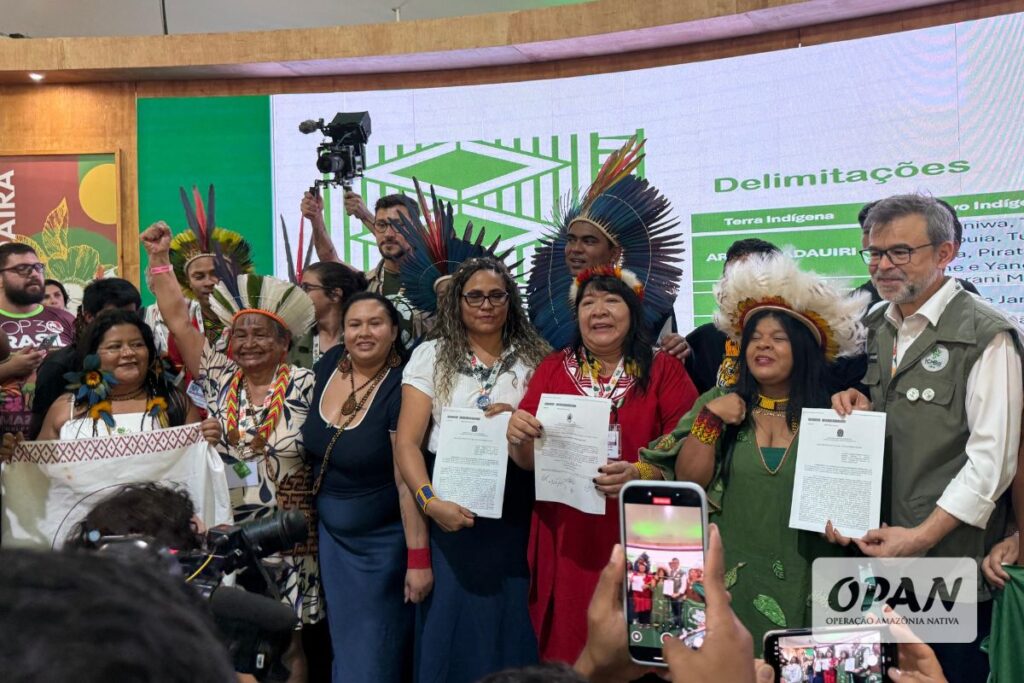
The package also included a six-lands, with the approval of a Detailed Report on the Identification and Delineation (RCID), and seven with the technical sub-groups (Wgs) are multi-disciplinary, 10 the land declared to be, and a further 10 are formed as an indian reservation, in addition to the order of the restriction of the use of Land, the Indian IT-Tanaru.
In addition, we have approved the TI Kaxuyana-Tunayana, which is located between the Amazon river and in the state of Pará, and Mato Grosso, brazil, two countries of the people’s Haliti-Paresi (Tv Appears and the Uirapuru and the Manoki indigenous land, after a few decades of the struggle of these people.
Eliseu Rodrigues da Silva, Way, Way, speaking of IT with the Kaxuyana-Tunayana, said in the joy of his people: “I have Come to you to discuss the outline of my territory, and climate change, which is something that is very important for the indigenous peoples, but also to all of you. Now, get out of my territory, that has been approved. ‘My people are very happy.”
However, the calendar, the demarcation is still facing challenges. In a report to the Coordination of the Indigenous Organizations of the Brazilian Amazon (Coiab), which was presented on the first day of the COP30, found that 29 of indigenous land in the Amazon, are already in place for the approval, but in the following charts, including the territories of the indigenous peoples in voluntary isolation, as the Kawahiva of the River, the Brown one (S) and Apiaká in the state, and the Isolated (FILE).