
To strengthen the communities, and protecting the territory and maretórios
Historic meeting mobilizes extractivists from all over Brazil in defense of socio-biodiversity
AI generated audio
By Talita de Oliveira | OPAN
Exceeding expectations from the public for the Week of socio-biodiversity gathered in Brasilia (DF), from the 2nd to the 5th of September, to around 450-leadership in the segment of natural rubber, the pirarucu fish, brazil nuts from the amazon region, in the small-scale coastal fishing, and the navy, and of the youth in the extraction, coming from different parts of the country. With the aim of strengthening their communities, and to protect the territory and the maretórios, both men and women, they faced a long journey to the capital city of the country and to take part in this important area of the joint conference.
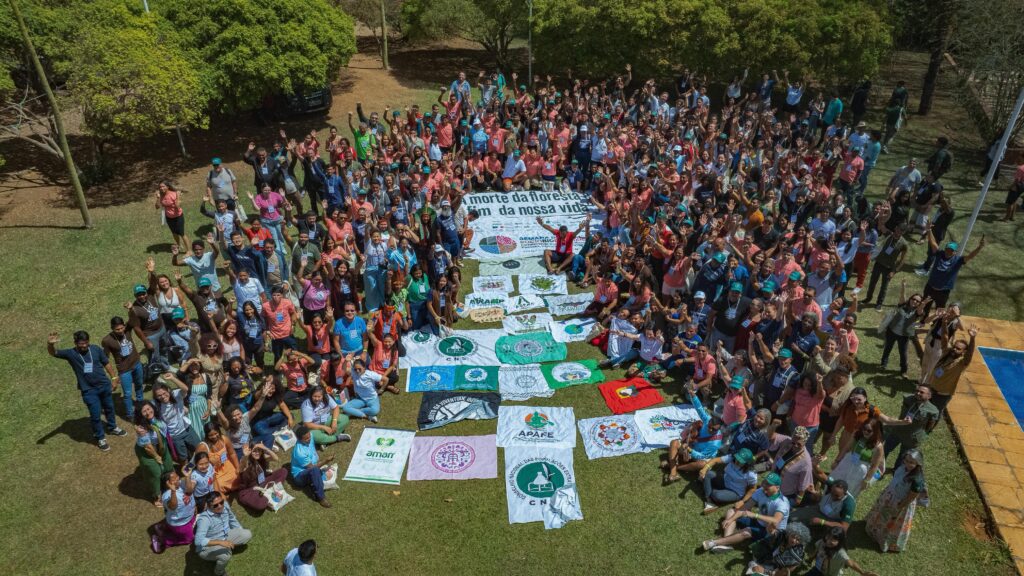
Organized by the National Council of Population in the Extractive industries (CNS) and the National Commission for the Strengthening of the Reserves, Extraction, and Traditional Peoples, the Extractive industries of the Coastal and Marine Confrem), with the support of various institutions and the public, the event brought out an intense schedule. Debates in the sector, at the meeting of the youth in mining, to establish a dialogue with the federal government’s plenary, the solemn meeting in honor of the Day, the Amazon, and a public announcement marked a four-day business activities.
The opening ceremony of the meeting was attended by representatives of four of the collective gifts of youth, in the extraction of the Memorial, the Chico Mendes (MCM), and the Coordination of the Indigenous Organizations of the Brazilian Amazon (Coiab), in addition to government agencies, such as the Brazilian Institute of Environment and Renewable Natural Resources (Ibama), the Instituto Chico Mendes de Conservação da Biodiversidade (ICMBio) and the Ministry of the Environment and Climate Change (MMA).
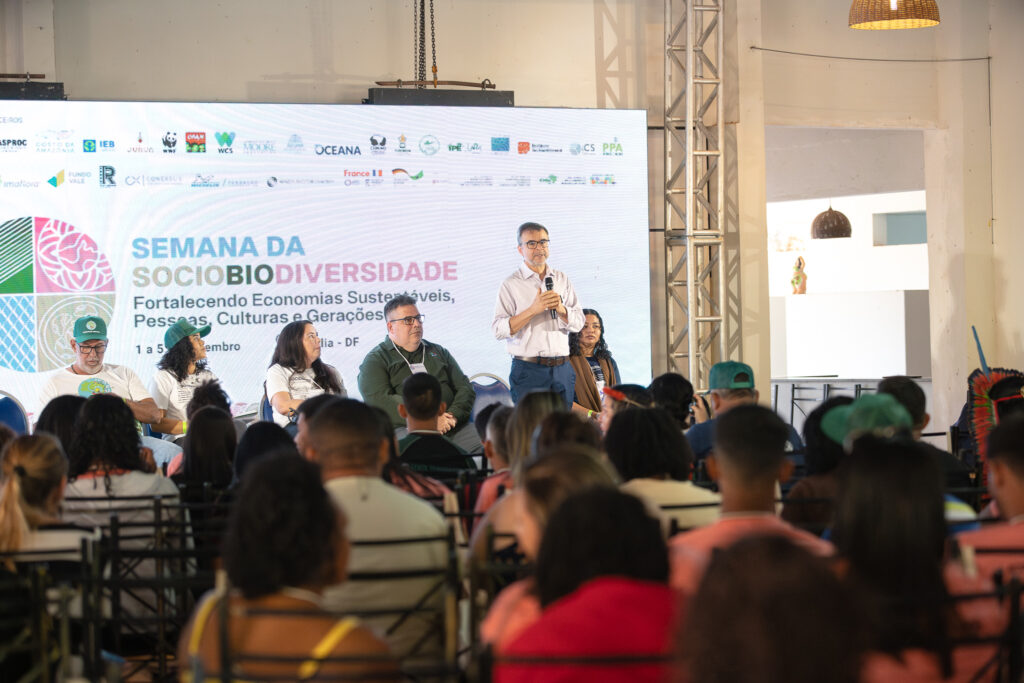
The president of the ICMBio, Mauro Pires, she was on the table, open, and pointed out to the representative of the meeting, highlighting the participation of institutions and groups. “The number of organizations that the present is stunning. That’s how our country is diverse, rich, and especially through the work of people who, in their day-to-day, they devote themselves to the defense of the forest, the maretórios, fields, and waters. This is such a diversity that it holds for Brazil,” he said.
Discussions, activities and schedule impact
During the meeting, the groups also met to discuss the guidelines and specific, and hold meetings of their own, such as the pre-COP, the Ocean, Fishing, and Mining the Coastal Sea; and the third Meeting with the National Commission of indigenous People and Traditional Communities; and the 14th Meeting of the group of the Pirarucu fish, and the Meeting of the Collective of the Rubber, and the meeting of the Observatory of Brazil in the Amazon (OCA) and the Supporters of the Regional Tree.
The Collective of the Pirarucu fish, as well as its board meeting, it was with the bodies of government, to discuss the guidelines, such as Payment for Environmental Services (PES) and law enforcement in the areas of data management. The Alliance-Waters of the Amazon , which operates in the defense and conservation of the aquatic ecosystems of the Amazon Basin, and it brings together the 30 organizations from seven countries, among them, the members of the group as at the OPAN and the Institute of Early, and we value the participation of fishermen and fisherwomen in their actions, and supported the presence of the manager and the manejadoras of the Collective for the Week of socio-biodiversity.
The members of the group met with representatives of the Ibama, ICMBio, the Federal Police, the Ministry of Justice and Public Security, and the Office of the United Nations office on Drugs and Crime (UNODC), united Nations environment Programme United nations Development programme (UNDP) and the Secretariat of the National bio-economy, in addition to the minister of Environment and Climate Change, and Marina Silva,. She took part in the opening of the Workshop, Payment for Environmental Services (PES) schemes in the Sociobioeconomia, with a focus on the management of arapaima in the Amazon river”, a partnership between the environment and the UNDP.
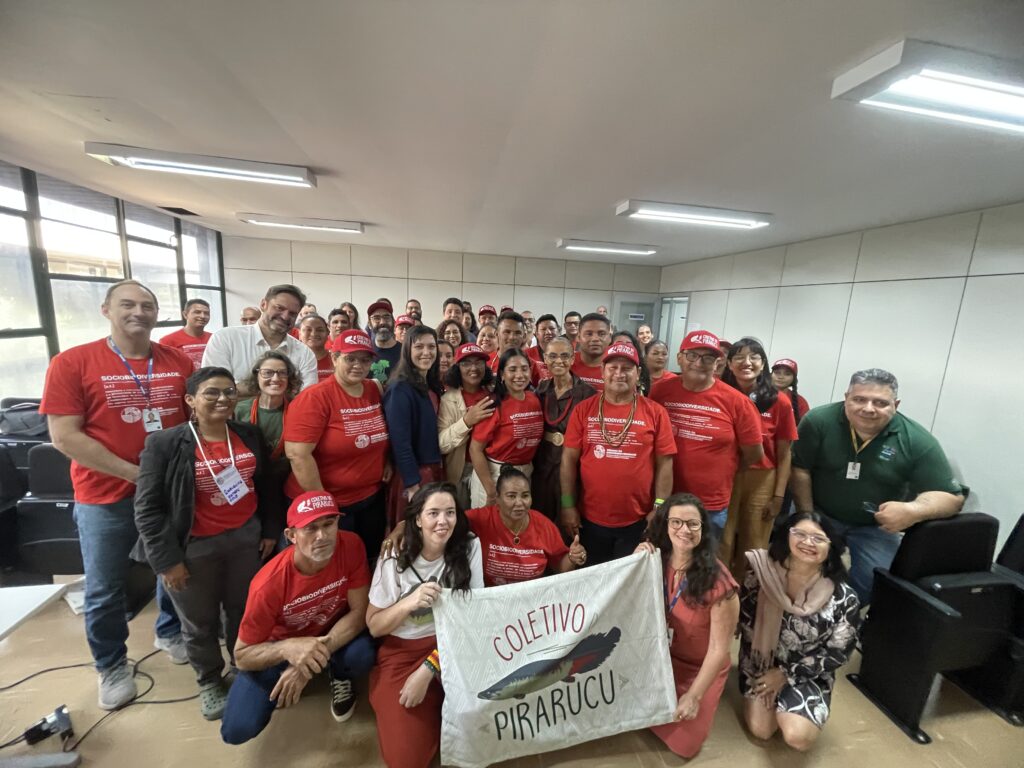
For the Edvaldo Tavares, chairman of the Association of agricultural, hunting and gathering from the Auati-Paraná (AAPA), the time it represents a step forward for both the managers and the manejadoras. “The PSA, which will come to all the people who remain in the environment, it is a very important step and is of great significance to the people who are part of this conservation of nature. The workshop presented and discussed with the managers of the proposal, a pilot for PSA in the Sociobioeconomia dedicated to the management of the arapaima, which was developed by the MMA, with the support of UNDP in the framework of the project’ Wood + Amazon.
“The proposal of the PSA is not the only one being set up by a team of government, but are also trying to involve managers in terms of how it’s going to be. So, it’s a big deal, and you feel like you’re pleased to be able to say,” he says Diomir de Souza Santos, the secretary of the Association of Community that is Working on issues of Sustainable Development in the City of Jutaí (ACJ).
The Solemn meeting in honor of the Day, the Amazon, and to act in the public
On the floor of the Chamber was filled to capacity with more than 450 leaders, groups, and associations in the extractive industries, in the solemn meeting in honor of the Day, in the brazilian Amazon. Joining together, they also attended by representatives of the civil society is organized, such as the Movement of those Affected by Dams (MAB), the Movement of the landless (MST), the Articulation of the Indigenous Peoples of Brazil (Apib), and the Coiab).
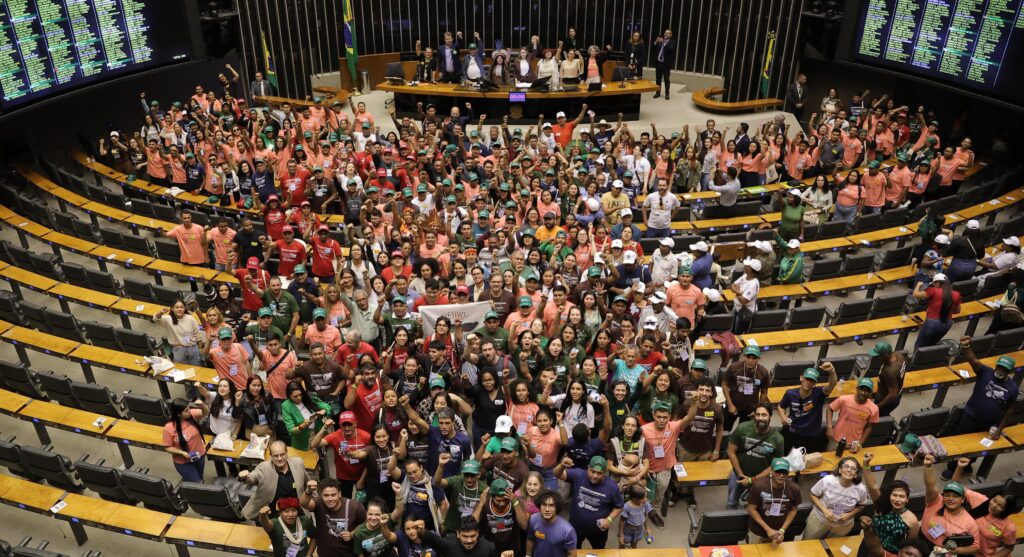
In the table and opening-up, the president of the caisse nationale de santé, rio de Santos, accompanied by the leaders, as the Camera Manchineri (Coiab), Ângela Mendes Committee (Mendes), and minister of Indigenous Peoples, Sonia Guajajara. During his speech, the Camera pointed to the central importance of traditional peoples and communities, in the defense of the forest, “When we say that we are in, the answer is anything but rhetorical. This is to confirm that, indeed, we are holding up the sky, so it does not collapse. And we do it with a call to action to all who would want to put it on this side of the story: the answer is us,” he said.
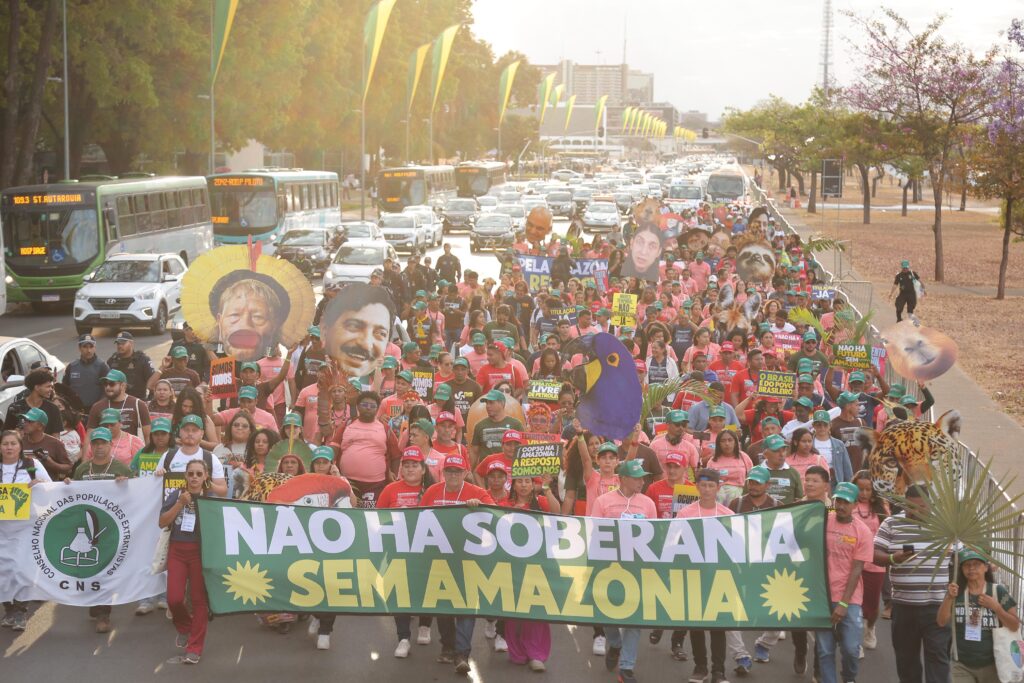
At the end the ceremony, the organizers have come together in a public ceremony, in the defense of the Amazon, going on a walk, the route to the National Museum to the square of the brands, in the heart of the capital city.
COP: 30
The theme of the COP: 30 and wrapped up the schedule of the proceedings of the Week of socio-biodiversity. The table, made by Andreas Fanzeres (Operation in the Amazon’s Native OPAN), Angela Mendes Committee (Mendes), and Gregory Abbott (Chair of the COP), led to thoughts about the Conference on the Climate, which will be held in November, in the city of Belém (PA).
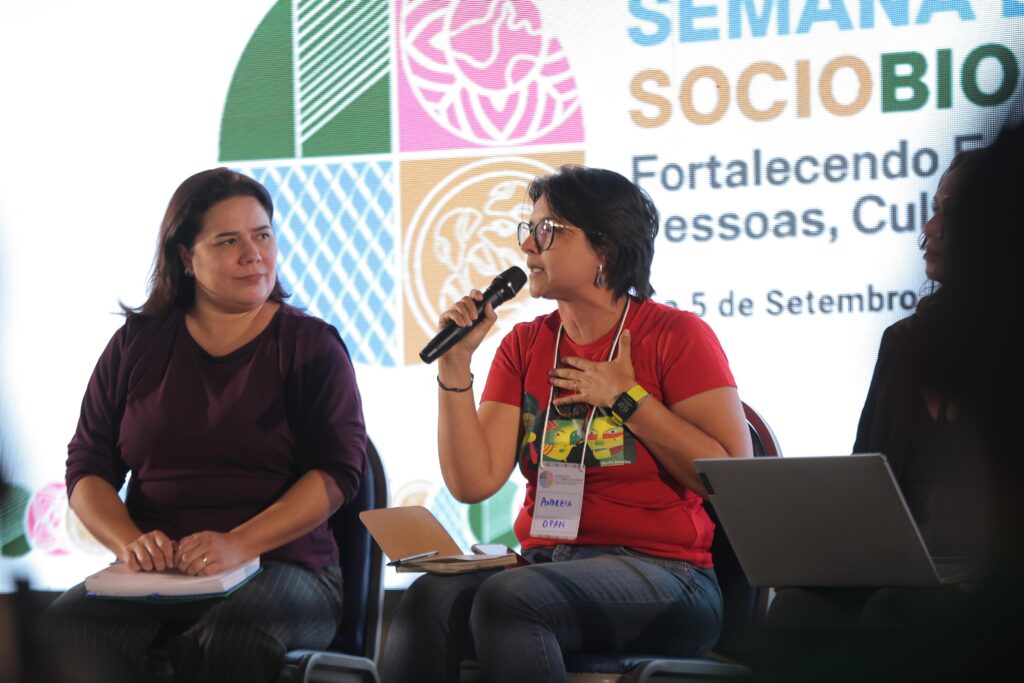
Andreas Fanzeres, shared the story of OPAN, in the latest edition of the COP, which has been involved since the year 2018, standing out the spaces, it can become an opportunity to focus on the traditional communities and the challenges of inserting in this context.
“I believe that the climate convention, should be understood as the opposite of the fight-to-the traditional communities and the indigenous peoples. But this space is not that easy, you are the languages and protocols that are alien to our daily lives in the territory. And what do we do in those spaces? We do what we do in the other: when to fight, and charge for our country to have the responsibility and consistency. This is to give visibility to the many segments of the society, that the following are invisible within that environment,” he said.
Letter of the Week
On the 5th day of September, in the Day of Amazon indigenous leaders, traditional peoples and communities in the extractive industries, descendants of runaway slaves, laborers, and agricultural workers, peasants and the rural natives, fishermen and fisherwomen, handcrafted and is in the protected coastal and marine have joined their voices to the release of the Letter of the Week, from the socio-biodiversity 2025.
The document read by the young representatives from each of the collective’s aims, it carries the reflections and proposals, and demands that come from the struggle and the experience of those who live in and protect the socio-biodiversity in the brazilian.
“We would like to reiterate our position ahead in the context of threats to its territory and to maretórios of the use of the bus. For us, there are spaces for the sacred, for the construction and maintenance of our identity, wisdom, change, and struggle. They are the roots of our ancestors, where they sit in the processes of political, social, and economic issues. Even with the lack of public policies, social and environmental-of-adjustment of part of our territory, and maretórios, recognition, and pay for our expertise and service, we are responsible for the conservation, management, and protection, of more than 30 percent of the protected areas on land and 26% of the marine areas,” says an excerpt from the Letter.
Read the full paper here.