
Settled at a Conference on Climate
The series of regional seminars to prepare the largest and most qualified participation of indigenous peoples in the story to the COPs
AI generated audio
By Talita de Oliveira | OPAN
We are living in a time in which the story is written in a fast-paced: on the one hand, and the advance of fascism; on the other hand, the strength of those who insist on holding on to heaven”. While the interests of the individual and a market the following to dictate the agendas and initiatives of the indigenous people began to multiply on the search for a planet as possible.
“The point of all this is our fight. With each step we’re taking is very important,” he said of the minister to the Indigenous Peoples, Sonia Guajajara, on the last day of the 15th, in Lábrea (AM). The first indigenous woman to take up a ministry in Brazil, Katrina has also been the prime minister of the State, a visit to the city, it is located in the so-called “arc of deforestation”. There are, however, public policy, progress towards the intention is to transform the area into “the arc of the restoration.”
A visit from a minister took place during the 11th stage of the Cycle, COParente, a series of preparatory meetings held by the Ministry of Indigenous Peoples ‘ (MPI) in the country, with the aim to strengthen and improve the participation of indigenous peoples in the 30th meeting of the Conference of the Parties (COP-30th), which will take place in November, in the city of Belém (PA).
Regional seminars in the Amazon
The Amazon contains the largest indian population in the country, with close to 500 thousand indigenous people from 60 different people, according to census data in the year 2022. This is why, unlike other states, where there are only the steps of the state, Amazonas, has received three regional workshops in the Loop COParente – the first of which was in When followed by São Gabriel da Cachoeira, and Manaus, accepting a proposal for the Articulation of the Indigenous Peoples of the Amazonas (Apiam), which has led to the organisation of the event in the state.
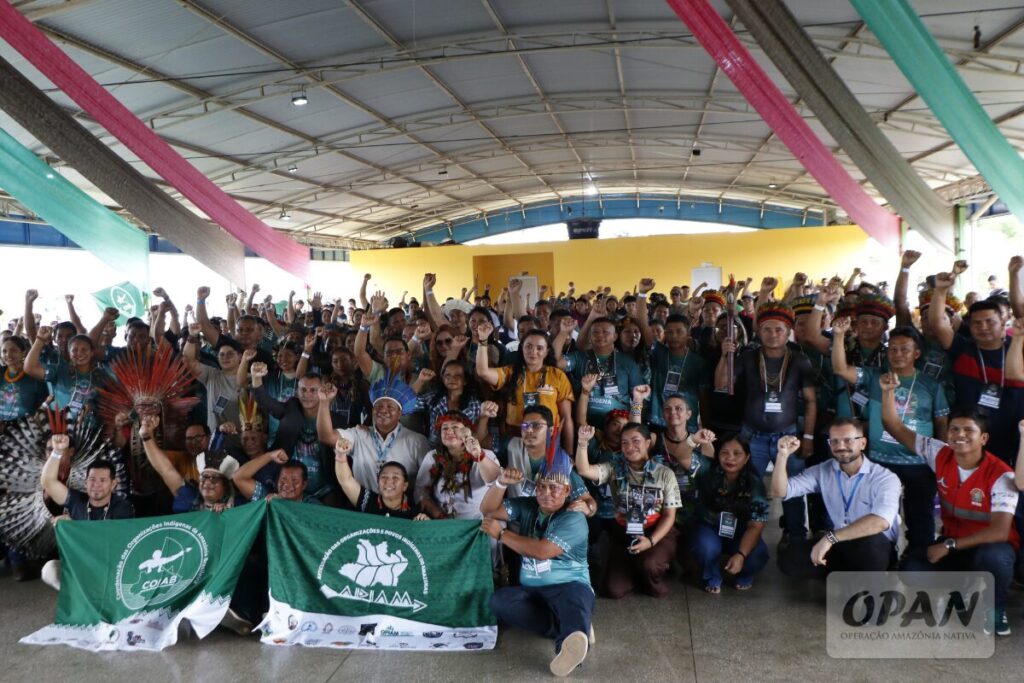
On When the seminar took place on the 14th and 15th of September, and was attended by the representatives of the indigenous peoples from the regions of the upper and Middle Madeira and Purus. In the table and opening up wide and varied, it was composed of 22 people, including representatives of indigenous organizations and non-governmental partners, and members of the public.
“Before, we only had white men as our leaders at events like this. I’m glad to see that the table is made up mostly by our own leaders, indigenous peoples,” said Jecinaldo the Sateré, the head of the counsel of participation in social activities, and the diversity of the LINKS.
Mariazinha Baré, the executive director of the Apiam, he pointed out the importance of the initiative is to be in a space of perception, and the exercise of social control. “We’ve met a lot of our pain, and we’re going to continue to speak of them with our voices. But climate change isn’t reaching to only one people, that it reaches all of you. That is why it is necessary for us to overcome our challenges, and to propose to the us to continue to be strong,” he said.
The pressures and impacts in the south of the Amazon river
On the first day of the debates, presented as an overview of the threats to the local situation of the indigenous territories in the south of the Amazon river, and on-going initiatives for adaptation to and mitigation of climate change. The cacique (chief) Joe Bajaga, head of the Federation of Organisations and Communities of Indigenous peoples of the Middle Purus river (Focimp), and laid out a timeline that shows the progress of the deforestation between 2019 and 2024, with When beginning to appear such as the one located in the critical region.
Another alarming has been the impact on supply chains, traditional, such as that of brazil’s amazon, the production of which has been brought to zero by the year 2025. In addition to this, the pressure to the site is unlawful, you come to the rivers, and to the homeland security of the indigenous people. “We’ve got to tell you what you want and how you want to be. We don’t want mercury in the territories, and of the rivers,” said Bajaga.

Mariazinha Baré, brought out a pack of legislation at the state level and national level that are in progress, and pose direct threats to the indigenous peoples, notably the State Decree no. 52.216/by 2025, “which provides for an amnesty for the widespread of the deforesters, what is the grabbing of public and weakens the control of the protection of indigenous peoples ‘ lands,” according to the technical note prepared by the Apiam. The document when it was filed in the Federal Public Ministry (MPF), requiring the body to the prosecution, immediately the action to the public with a request for a suspension of the injunction of the act.
Climate justice
Andreas Fanzeres, co-ordinator of the Rights of Indigenous people in the Operation in the Amazon’s Native (OPAN), has also contributed to the debate on the functioning of the conference of the weather, and detailing concepts such as the mitigation of, and adaptation of the Contributions of the Nationally Determined (NDCs). She noted, however, that it is a theme that is central to civil society tends to stay out of the negotiations, the officers of the climate justice.

The “climate justice, it is not at the negotiating table, but it is a principle that is taken up by the civil society in all areas of policy focus of the conferences, all of which are suffering from climate change, but in different ways: those who have access to the right resources, does not experience the same impact for those who live in remote rural areas and depend directly on nature. For this reason, the climate justice-is the translation of social justice for those in the most vulnerable situations, need to be attended to first, and be given priority in the policies of the government,” he said.
Chico’s Black Apurinã, the leadership of the history of the movement, an indigenous advisor to the Fund’s Podáali as well as an advisor to the indigenous in the Special Indigenous Health District of the upper Rio Purus (DSEI/ARP), reported on the experience of the Eco-92, as soon as the pressure of the international linked with the economic cooperation and the expansion of indigenous participation in decision-making. “It taught us a lot for the people and the government. And we, in fact, we participate in the demarcation of the territories, surveillance, and even the protection of a territorial,” she said.
Today, Chico points out that the international debate to recognize the structures that have already been created by other people, such as the fund for indigenous populations. “The Bottom Podáali, for example, we are financing the projects are small, but they come to the village. We want these efforts to be acknowledged by the advocates of Brazil, in the reduction of deforestation in the fight against climate change,” he said.
Contributions Nationally Determined (NDCs)
During the meeting, were presented to the two most important documents produced by the indigenous movement in the context of the conference on the climate: “the NDC of the Indigenous Peoples in Brazil”, produced by the Articulation of the Indigenous Peoples of Brazil (Apib), and its organizations; and the Political Declaration of the Indigenous Peoples of the Amazon Basin, and in all of the biomes in Brazil, to a COP for 30” produced by the Coordination of the Indigenous Organizations of the Brazilian Amazon (Coiab), and their organizations.

These two documents indicate that the demarcation and protection of the territorial, as the main goal of the climate of the indigenous peoples of the condition from which the rest of our demands, they are derived from,” says the passage of the NDC of the Indigenous Peoples of Brazil. A policy statement prepared by the Coiab), he adds: “The demarcation of their lands and the full protection of the indigenous territories, in particular in areas with the presence of indigenous peoples in isolation and in recent contact with, is effective climate policies that guarantee the rights and enhance the conservation of biodiversity, and climate change”.
Settled for the COP to 30
“If we are fighting to protect their territories and we need to be part of it. There’s a sense of it. We have to talk about and show it to the COP, to the world. We are getting ready for the mission villages of the discussion and make it so that the COP of 30 have the largest and the best indigenous participation in any conference,” he said, in front, by the minister, Sonia Guajajara, of the event. She took part in the second day of the workshop, and it was received warmly, with cultural performances of the indigenous peoples in the present.

Karen began his speech by recalling to his political career within the indigenous movement, through organizations such as the Coiab), and Apib, until you get to the present moment, in which she is a member of the federal-elected, and prime minister of the indigenous of Brazil. “None of us would argue, in a place in the occupation of the spaces on their own. Every step, however small it may be, we need to cherish it,” said the minister, addressing the look of Chico’s Black Apurinã, who reverenciou as a teacher.
The minister explained that the initiative of the LINKS, to enhance and improve the presence of indigenous peoples in the conference on the climate, citing, for example, the “Village in the COP”, a space that will be built in Belém, at the conference, dedicated to the nearly 3-thousand indigenous people from all over the world. The site will feature a design for the hospitality, trade shows, events, and movements, according to the Camp’s Land of the Free (ATL), which is held annually in Brasília (federal district).

Karen also mentioned that the goal of the ministry is to ensure that at least 500 indigenous groups to participate in the “blue zone” of the conference, the venue of the talks, in and of itself.
“We don’t have to come out as victims, but when it comes out, as the power to protect the environment. We have to get out of the COP show in the world, the central role of indigenous peoples to climate change mitigation,” he said.
The Cycle of COParente have gone through the habitats of the pantanal, Caatinga, Pampa and Atlantic Forest, Cerrado, and Pantanal, and now, it comes in the member states of the brazilian Amazon. At each step, the representatives appointed by the indigenous movement, have been selected to participate in the COP of 30, while the contributions of indigenous peoples, they are compiled and collected into a document that would guide you in the position of Brazil in the negotiations on global climate.