
The first indigenous state deputy of Brazil
Eliane Xunakalo takes office in the Legislative Assembly of Mato Grosso in a historic milestone for the state legislature
AI generated audio
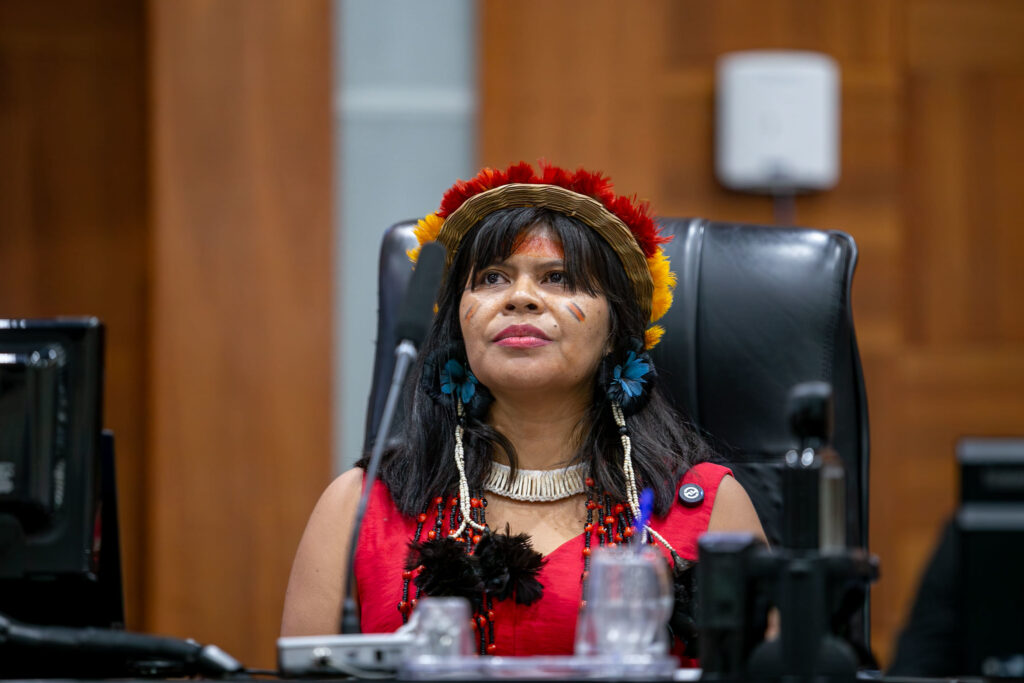
By Dafne Spolti/OPAN
Yesterday (15), Eliane Xunakalo, leader of the Kurâ-Bakairi people, took office in the Legislative Assembly of Mato Grosso, inaugurating the occupation of state legislative spaces in the country by indigenous representatives. At the swearing-in, she pledged to work for the people of Mato Grosso and, especially, for the agendas of traditional communities and indigenous peoples, whom she referred to as authorities.
“Today we have the opportunity to tell society that we also do politics, a politics for the community,” said the deputy. “We are arriving today after 190 years of assembly. I am the first, and I hope many women and men will follow,” she stated, highlighting her role in ensuring that the voices of the territories are heard in the legislative space.
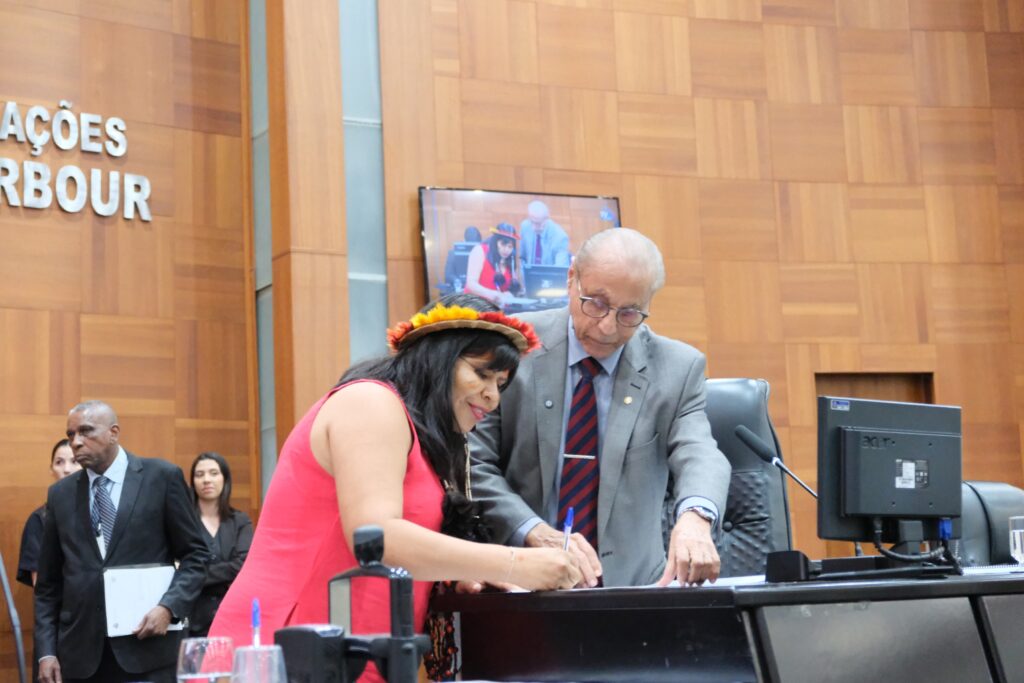
“We are very happy and honored on behalf of our people, on behalf of our leaders and on behalf of our people who have passed, who could not be here to witness this history,” said teacher and youth leader Edna Bakairi, from the Kurâ-Bakairi people, from the Indigenous Land Santana, in Nobres – the same territory as the deputy.
As a first act, Eliane Xunakalo, who will hold the position for 30 days during the leave of Deputy Lúdio Cabral (PT-MT), promoted a public hearing on indigenous economies. It was during this activity that representatives from the indigenous movement, social organizations, public power bodies, and indigenous people from Mato Grosso were able to concretely celebrate the achievement of having leadership in the state parliament.
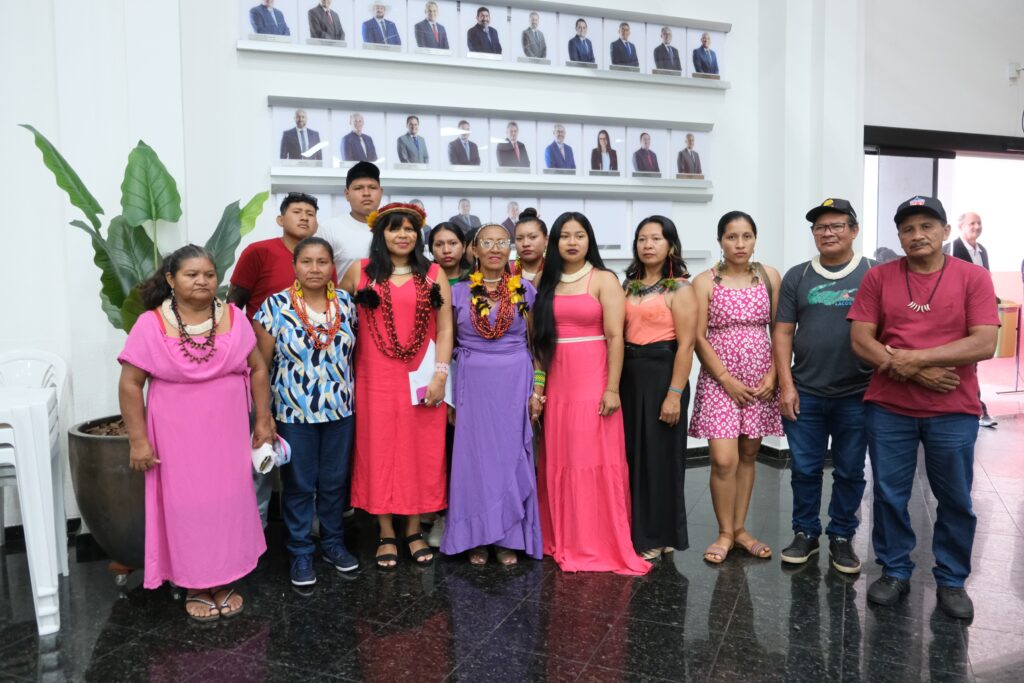
Historical milestone in the state legislature
“Eliane’s position in the Legislative Assembly of Mato Grosso is not a symbolic act of the political system; it is a rupture of this political system,” said Joziléia Kaingang, executive director of the National Articulation of Indigenous Women Warriors of Ancestry (Anmiga). “Mato Grosso is making history, just as Mato Grosso made history with our first federal deputy, Mário Juruna, and just as Mato Grosso made history with our nation’s first intercultural degree, training indigenous teachers.”
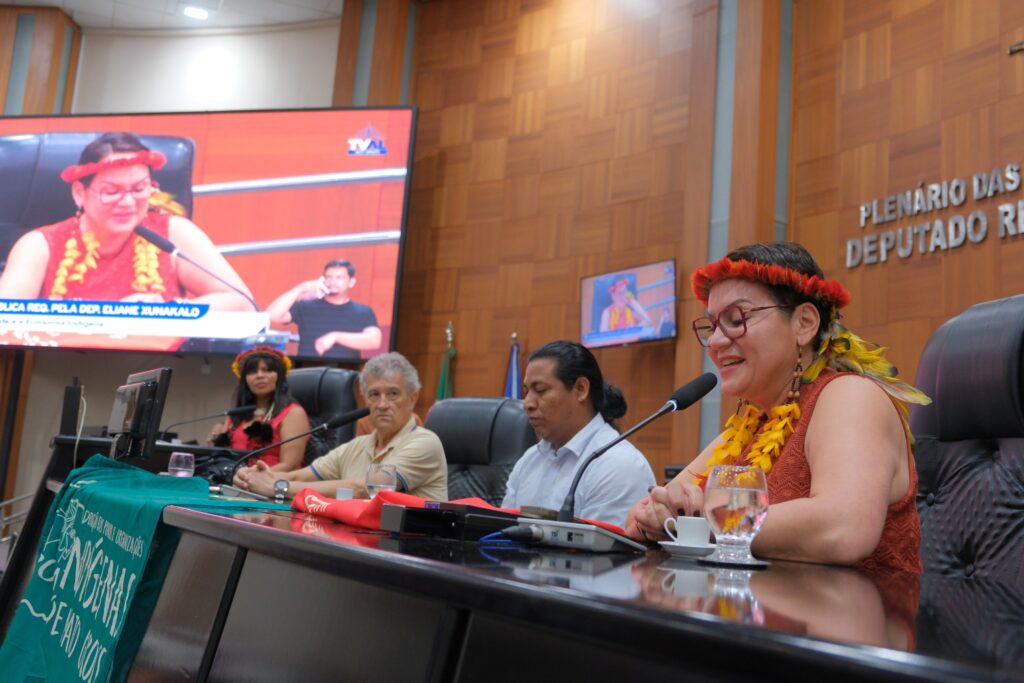
The director explained Eliane’s intention to run for election based on her involvement with the Cocar Bench, which has been electing indigenous women to various positions across the country.
“Eliane is part of this network of women who made themselves available in 2022 to run in the electoral race. It is very difficult to put your life, the lives of your children, your family, and your partner’s life at stake to compete in this election. So, this appointment is a representation of what we in the Cocar Bench talk about, reaching spaces of power, decision-making spaces,” she stated, also highlighting the tension that this arrival represents, given the colonial structure of these spaces.
The general coordinator of the Operation Amazônia Nativa (OPAN), Ivar Busatto, also highlighted the importance of Eliane Xunakalo’s position for the state legislature, wishing for continuity. “It is a great joy for us to have the opportunity to participate in a public hearing coordinated by a deputy who is starting a process that will hopefully lead to many more long-term opportunities,” he expressed.