
Another victory: Government excludes UHE Castanheira from the ten-year energy plan
After years of mobilization, the project officially came out of the country’s energy planning
The federal government, in its plans for energy expansion for the next 10 years, left out the construction of the hydroelectric plant (UHE) Castanheira, on the Arinos River, a tributary of the Juruena, in Mato Grosso. This means that, for the period from 2025 to 2034, there is no forecast for this work, which would interrupt the course of this important river and impact the indigenous peoples and rural communities of the municipality of Juara, especially Pedreira and Palmital.
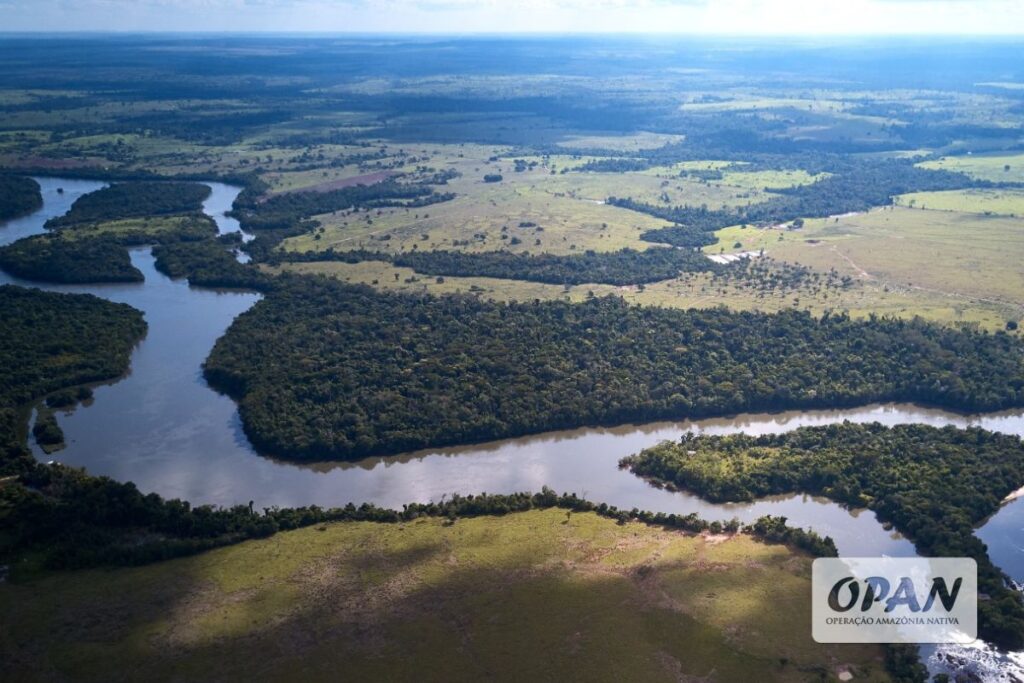
the construction of the HPP was included in the previous version of the Decennial Energy Expansion Plan (PDE), but was excluded from the document prepared this year after a long battle led by the Juruena Vivo Network. The PDE 2034, which defines the guidelines for the energy sector, is in the final stage and after a public consultation process will be published later this year.
This is the second victory of Rede Juruena Vivo in this process. the first was the Archiving of the environmental licensing of UHE Castanheira by the State Secretariat for the Environment of Mato Grosso (Sema-MT), on March 18 of this year.
The studies for the construction of the plant were carried out by the energy research company (EPE) and showed that the HPP was going to generate less than 100 MW of firm energy, despite the forecast of the flooding of 94.7 km2.
Since then, the project has faced strong opposition from the local community due to its potential environmental, cultural and socioeconomic impacts. Studies have shown that the construction of the plant would affect five different indigenous peoples: Rikbaktsa, Munduruku, Apiaká, Kawaiwete and Tapayuna, who were not consulted freely, priorly and informed, as required by the legislation. A Multidisciplinary note made by the partners of the Juruena Vivo Network provided the main technical and legal bases for the identification of irregularities in this enterprise.
In addition, the Tapayuna were never called to discuss the enterprise, which is located in its territory of traditional occupation. The damage to the ecosystems of the Arinos River, vital for the survival of these communities, generated concern about the physical and cultural reproduction of their populations.
The construction of the hydroelectric plant, in addition to directly affecting the indigenous communities, generated concern among rural producers in Pedreira and Palmital. The fear was for the flooding of their lands, which could compromise or even make their agricultural activities unfeasible. The economic feasibility of the project was also questioned considering the high cost of implantation and the limited power generation capacity.
Collective victory
The coordinator of the Movement of People Affected by Mato Grosso dams (MAB-MT), Jefferson Nascimento, celebrates the news of the exclusion of the construction of the Castanheira HPP and evaluates it as the result of years of collective work and the persistence of the organization, mobilization and struggle of various communities and organizations.
‘We know that this is a lot of the struggle of communities, peoples and organizations. Otherwise I think that this hydroelectric plant would already be operating. Prevent the constructions, or to advance in several other guidelines”, said Nascimento, who also represents the Arinos micro-region within the Juruena Vivo Network.
In May of this year, Representatives of the Juruena Vivo Network presented a document during a meeting with the Ministry of Mines and Energy (MME) and requested the withdrawal of the Castanheira UHE project from the PDE, highlighting the need to respect indigenous rights, environmental protection and the prior, free and informed consultation of the affected communities.
In view of the arguments presented, Thiago Vasconcellos Barral Ferreira, National Secretary for Energy Transition and Planning at the MME, informed at the time that HPP Castanheira would be excluded from the PDE 2024-2034.
Jefferson Nascimento also sees the achievement as an inspiring example for other communities and social movements facing similar threats, when the union of different social actors was instrumental in reversing a project that seemed right.
Despite the victory, the coordinator warns of the need to maintain surveillance and continue the fight, as the threat of new projects can arise at any time. ‘It came out of the ten-year plan, but the ten-year plan is made annually. Nothing guarantees us that maybe, for the next few years, Castanheira will reappear. So the fight is eternal, the mobilization is permanent’.
Continuous fight
Despite the filing of the Castanheira HPP, a report by Operation Native Amazon (OPAN) identified 180 hydroelectric plants in the Juruena basin, until January 31, 2024.
About 46% of these projects correspond to hydroelectric power plants (CGHS), while 40% are small hydroelectric plants (SHPs). Large projects (UHEs) represent 14% of the total.
The data are part of the “Bulletin of Pressures and Threats to Indigenous Lands in the Juruena River Basin”, which provides information on the region’s energy and mining planning to identify their potential impacts on the lives of indigenous peoples, traditional communities and other social groups that live in the river basin. Juruena.