Meetings in Manaus strengthen the network for sustainable management of pirarucu
Community representatives, civil society organizations, and governmental institutions discussed achievements, challenges, and pathways to expand public policies aimed at management
By Talita Oliveira | OPAN
Between May 4 and 8, Manaus (AM) hosted an intense agenda of meetings and collaborations aimed at strengthening the sustainable management of pirarucu. The meetings brought together representatives from community associations, civil society organizations, and public bodies to discuss advances, challenges, and perspectives of the activity, recognized for its positive impacts on income generation, environmental conservation, and the strengthening of grassroots organizations.
Organized by the Pirarucu Collective — a network that brings together about 2,500 managing families in the Amazon — the program focused on consolidating strategic public policies for the sector, such as the Arapaima Program and the Payment for Environmental Services (PSA) for Pirarucu. The agenda also included discussions on the results of management in 2025 and ways to strengthen the activity in the territories.
In this context, the continuous participation of community leaders in political advocacy and articulation spaces, such as those promoted by the Pirarucu Collective, has been fundamental to strengthen the activity and enhance the recognition of managing communities.
This process also has the support of the Raízes do Purus project, developed by the Native Amazon Operation (OPAN) in partnership with Petrobras. For over a decade, the initiative has strengthened the participation of indigenous leaders in regional and national articulation spaces, as well as supporting the sustainable management of pirarucu carried out by the Paumari and Deni peoples, who are part of the Pirarucu Collective through their representative associations.
Advisor of the Indigenous Association of the People of the Waters (AIPA), Margarida Paumari has been accompanying the agendas of the Pirarucu Collective since 2022. For her, the progress achieved reflects years of collective mobilization and persistence from the managing communities.
“I remember when we used to leave the communities to attend the meetings of the Collective, and today I see that everything we had been discussing has materialized. We are living the realization of a dream,” she states.
Arapaima Program Meeting
On May 4, the first activity of the week took place, the meeting of the Permanent Technical Committee of the Arapaima Program. Composed of 29 members, including full and alternate members, the committee brings together officials from the Brazilian Institute of Environment and Renewable Natural Resources (Ibama), responsible for the program, representatives from public agencies, community organizations, research institutions, in addition to members of the Pirarucu Collective. Its main function is to advise and accompany the implementation of the program, strengthening the dialogue between government institutions, community organizations, and partner entities involved in the sustainable management of pirarucu.
Felipe Rossoni, coordinator of the Raízes do Purus project and alternate member of the Pirarucu Collective on the technical committee, evaluates that the space has broadened the knowledge of Ibama officials about the potential of management activities beyond fishing, especially regarding the structure of territorial protection and surveillance at the base level, reducing the distance between decisions made in Brasília and the reality of the territories.
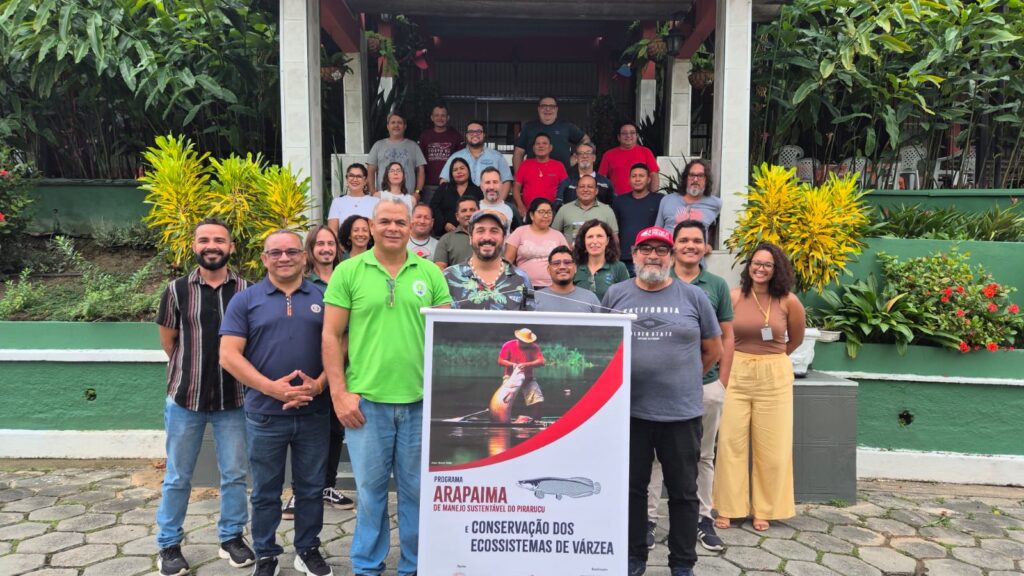
“We now have a more structured recognition, and this experience can serve as a model for the management systems of Protected Areas (Indigenous Lands and Conservation Units) and Fishing Agreements to incorporate knowledge generated and implemented in the territories, using them in the management of these areas. This is a great point of connection for useful and strategic information for the Brazilian state to absorb and internalize,” says Felipe.
16th Meeting of the Pirarucu Collective
On May 5 and 6, the Pirarucu Collective held its 16th meeting, gathering around 100 participants, representatives from 44 organizations, including community associations, governmental institutions, non-governmental organizations, and invited researchers. The meeting was marked by the presentation of recent advances and the collective achievements reached by the group, such as the launch of the Pirarucu PSA, the publication of Interministerial Ordinance MAPA/MMA/MPA No. 41, and the implementation of the Arapaima Program. The meeting also celebrated the honors of the 3rd Award for Women of the Waters to Ana Paula Paumari, president of AIPA, awarded in the category of Indigenous Fishing or Aquaculture, and Fernanda Moraes, awarded in the category of Continental Artisanal Fishing, both managers who are part of the Collective.
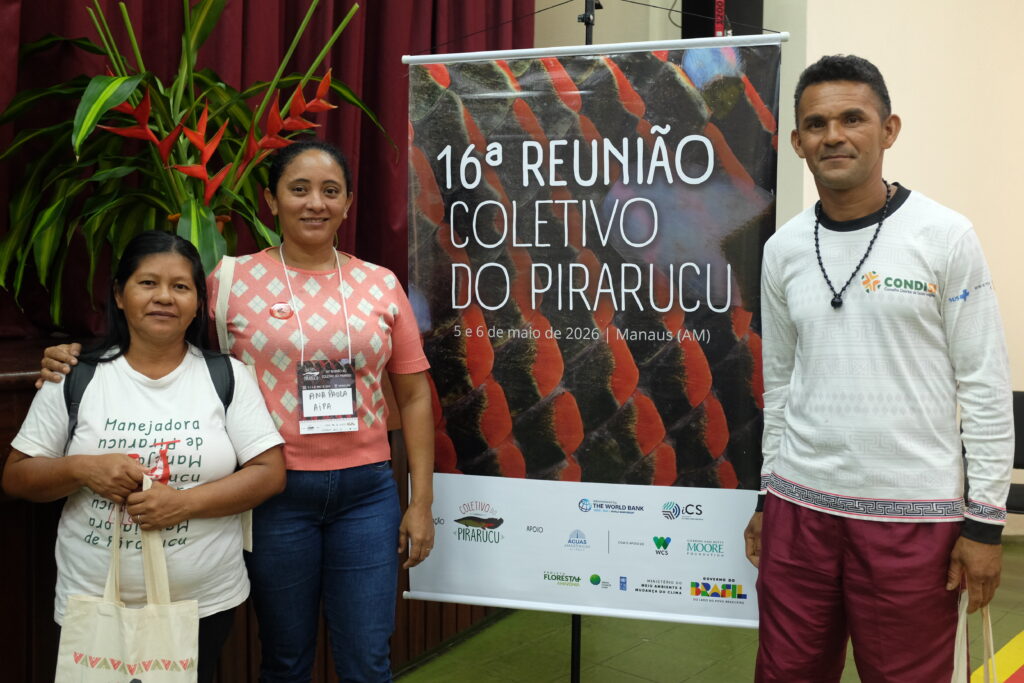
“When we see a collective achievement gaining prominence, especially led by women, it is very exciting. This is a dream of the women handlers. Representing those who are at the grassroots, in the daily struggle, is very rewarding because this recognition exists thanks to them and to everyone working in the territories,” expressed Ana Paula Lima while recalling the award.
The program continued with the sharing of the 2025 fishing results, conducted by community associations and Ibama, promoting a space for exchanging about the challenges and advances of sustainable pirarucu management. The meeting also featured discussions on public policies related to management, as well as the presentation of projects aimed at possible collaborations with the group.
Pirarucu PSA Workshop
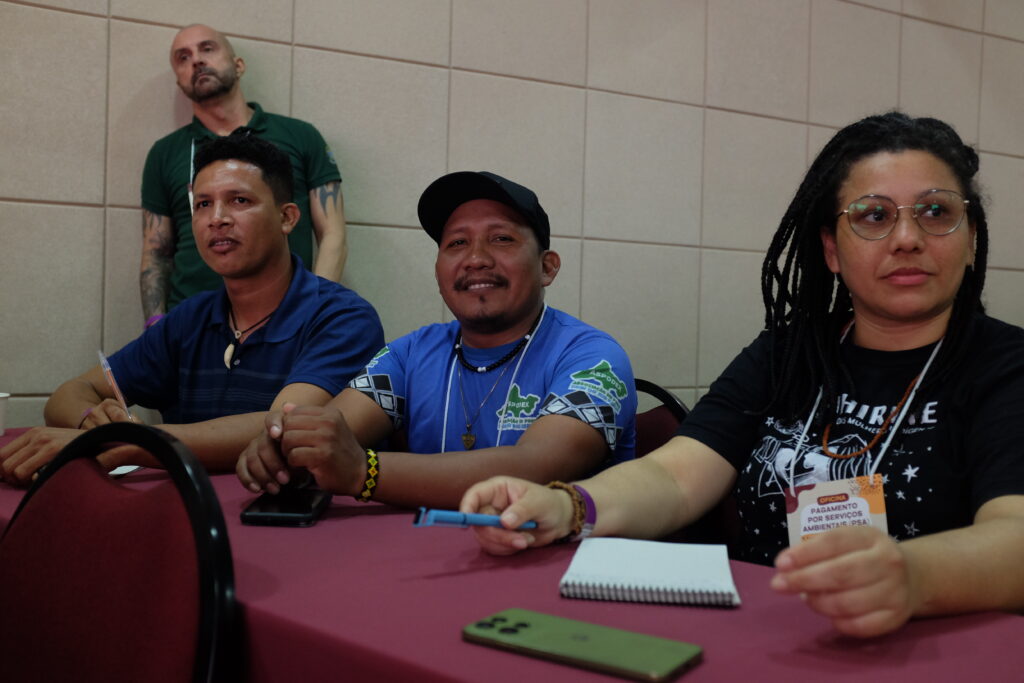
Wrapping up the week’s program, on May 7 and 8, the Workshop of the Environmental Services Payment Program of Sociobiodiversity for Sustainable Community Management of Pirarucu (PSA Pirarucu), promoted by the Ministry of the Environment and Climate Change (MMA) through the National Bioeconomy Secretariat, gathered more than 180 participants. The main objective of the activity was to present the MMA/CONAB Public Call No. 01/2026, in addition to guiding and supporting communities in the qualification and registration process in the program. The space was also marked by reflections on the journey of constructing the PSA of the Pirarucu and the collective mobilization that made its creation possible.
“I see that there is increasingly more collectivity and partnerships, which further strengthens our work. I found it very good to see the progress over the years, the result of efforts alongside institutions like Ibama, ICMBio, and other entities, as well as local organizations, such as Aspodex,” evaluates Pha’avi Hava Deni, president of the Deni People Association of Xeruã (Aspodex).
Reinforcing the collective nature of the initiative, Bruna De Vita, director of the Department of Policies for Stimulating Bioeconomy of the National Secretariat of Bioeconomy at MMA, emphasized the historical importance of the moment and the leading role of the managers in consolidating the program.
“We are implementing a very innovative initiative, but it has been discussed by the managers for a long time. Our dream begins with the PSA for pirarucu, but continues with the desire for the program to extend to other chains of socio-biodiversity,” she concludes.